Regional Economic Pulse Methodological Note
Name of the statistical operation and acronym: Regional Economic Pulse
Responsible entity: Banco de la República (the Central Bank of Colombia, BanRep)
Type of statistical operation: non-probability sampling.
Background
In its mission to preserve the purchasing power of the currency in coordination with the general economic policy, Banco de la República also fulfills special functions such as the generation of knowledge that contributes to decision-making. Thus, in a country of regions such as Colombia, it was of great interest to expand the monitoring and analysis of local economies as well as to respond to the demand for more timely information, which led to the construction of the Regional Economic Pulse (PER, by its Spanish acronym). This short-term indicator allows to identify the dynamics and fluctuations of the regional economies and their national aggregate by monitoring certain economic activities.
The Pulse was inspired by the U.S. Federal Reserve´s Beige Book. The Beige Book is a qualitative report of current economic conditions in the twelve Federal Reserve Districts, is produced eight times a year, and is presented two weeks before the Federal Open Market Committee meeting, with the purpose of making it available to executives for economic policy decisions. The reports are constructed from interviews with business leaders, economists, market experts, and other organizations that each of the districts compiles through formal and informal methods. The sources are not randomly selected, rather carefully chosen to receive accurate and objective information on various economic activities. Some sectors monitored are industry (sales, production, inventories, orders); trade (sales); agriculture and livestock (production and demand); construction (housing sales); banking and finance (loans); natural resources (oil and gas production); personal services (income); health (income); education (income); employment (employment, wages); and prices.
With this perspective, in 2010, Banco de la República began collecting information on economic activity from various areas of the country. This work was carried out by BanRep’s seven Regional Economic Studies Centers. This approach allowed to capture the diversity and dynamics of the Colombian economy across geographic areas and economic activities. The information was collected mainly through perception surveys conducted through interviews with business leaders, who know in real time the productive performance of the company they represent, the conditions of their environment at the end of each period, and the causes of the behaviors they refer to. The first pilot reports were generated for some areas of the country where it was feasible to conduct interviews with entrepreneurs. To achieve the broadest geographic and economic coverage possible, activities, regions, and monitoring variables were determined considering the studies on the economic composition of each of the country's regions, a document published in 2013, and the feasibility of accessing the information with the required timeliness. This made it possible to determine the territorial frames of reference to structure the monitoring of the regional situation, which is decisive for the national aggregate.
Subsequently, following the need to generate economic indicators from perception surveys and make use of available statistics, the construction of a numerical indicator was outlined. Accordingly, at the end of 2012, Banco de la República developed and began producing the Regional Economic Pulse (PER), a monthly indicator of economic activity, which has gradually been implemented across different geographic regions of the country per BanReps regional classification: Antioquia, Southwest, Caribbean, Northeast, Central Coffee Region, and Llanos Orientales. The last jurisdiction included was the Bogotá region in 2019, which represents more than a quarter of the country’s Gross Domestic Product (GDP), thus enabling to monitor most of the national territory.
Overall objective
To prepare short-term economic measurements for seven regions of the country, six economic activities, and the national aggregate, identifying their dynamics and fluctuations with a lag of approximately 20 days at the close of the month of measurement.
Specific objectives
- To calculate the Regional Economic Pulse indicator for seven regions of the country on a monthly basis.
- To calculate the Regional Economic Pulse indicator for the national aggregate on a monthly basis.
- To calculate the Regional Economic Pulse indicator for six national economic activities on a monthly basis.
Thematic scope
The Regional Economic Pulse’s statistical operation responds to the need for short-term economic indicators to identify the dynamics of the seven regions of the country and its national aggregate by monitoring six economic activities. The definition of the regions took into account the similarities in economic composition and geographic proximity of the departments. Six economic activities were also monitored, considering their relevance in the regional economic composition and their feasibility to access information.
The geographic areas are:
- Antioquia
- Southwest (Valle del Cauca, Cauca, and Nariño)
- Caribbean (Atlántico, Bolívar, Magdalena, Córdoba, Cesar, Sucre, La Guajira, and San Andrés)
- Northeast (Santander, Norte de Santander, and Boyacá)
- Central Coffee Region (Caldas, Quindío, Risaralda, Tolima, Huila, and Caquetá)
- Llanos Orientales (Meta and Casanare)
- Bogotá (Bogotá and Cundinamarca)
- National aggregate
The economic activities monitored are:
- Trade
- Industry
- Transportation
- Agriculture and Livestock
- Financial
- Housing
Basic concepts
Economic activity: process or group of economic operations for the production of goods or services, which may be transferred or sold to other units, stored as inventory, or used by the producing units for final use. (Source: National Administrative Department of Statistics (DANE in Spanish) International Standard Industrial Classification of all Economic Activities Revision 4 Adapted for Colombia (ISIC Rev. 4 A.C.)).
Agricultural production: in agricultural crops, it refers to the total amount of product obtained from an area occupied by cultivated plants of plant material: stem, foliage, or fruit, for animal or human consumption; fiber, honey, and latex, for industrial use. In the case of livestock, it refers to the total amount of animals and milk obtained in a given area, for animal, human, and industrial consumption. (Source: National Administrative Department of Statistics DANE - Methodology of the National Agricultural Survey 2023).
Industrial production: quantity of processed products and by-products and waste resulting from production and intended for sale, quantity of manufactured products for third parties that deliver raw materials. (Source: Banco de la República, based on the definitions of the National Administrative Department of Statistics DANE - Methodology: Monthly Manufacturing Survey with a Territorial Approach 2020).
Sales: quantity of goods resold (purchase and sale) by the company or establishment in the reference month. (Source: Banco de la República based on definitions from the National Administrative Department of Statistics (DANE) - Methodology: Monthly Survey of Retail Trade and Commerce of Vehicle 2015).
Hotel occupancy: percentage that is equivalent to dividing the number of occupied rooms by the number of available rooms by one hundred. (Source: National Administrative Department of Statistics (DANE) - Methodology: Monthly Accommodation Survey 2023).
Credit disbursement: resources from the transfer of money in exchange for a promise of payment in the future. (Source: Banco de la República based on the glossary of the Office of the Financial Superintendency).
Company: institutional entity in its capacity as a producer of goods or services. It is an economic agent with autonomy to make financial and investment decisions and with authority and responsibility to allocate resources to the production of goods and services and that can carry out one or more productive activities. (Source: Harmonized Concepts of Colombia - DANE).
Establishment: an enterprise or part of an enterprise that independently engages exclusively or predominantly in a type of economic activity at a location or from a location or within a geographical area, and for which, as a statistical unit of observation, data exist or can be collected with some precision to allow analysis of the economic sectors of interest. (Source: based on Harmonized Concepts of Colombia - DANE).
Indicator: observable and verifiable quantitative expression that allows describing characteristics, behavior, or phenomena of reality through the measurement of a variable or relationship between variables. (Source: National Administrative Department of Statistics DANE - National Planning Department (DNP in Spanish).
Timeliness: refers to the time elapsed between the occurrence of the phenomenon under study and the release of statistical information, so that the information is available in time to support decision-making. (Source: Statistical Office of the European Communities (Eurostat), 2013).
Lag: indicates the delay in time units of the dissemination of statistical information with respect to the time at which the phenomenon under study occurs.
Annual change: the result of comparing the level of a variable in the reference month (t) versus the level of the same variable twelve months earlier (t-12); this result can be positive (increase), negative (decrease), or null (stable).
Rescaling: technique that consists of changing the values of a variable to another scale, without altering the proportional relationship that exists between them. It allows to compare variables of different magnitudes adjusting them to a specific range or interval.
Weighting: assigning a certain weight to each element of a set according to its relevance to obtain a weighted measurement.
Economic dynamics: evolution or change of economic phenomena over time, comparing them with results that occurred at an earlier time.
Perception survey: A specific type of survey that aims to know the appreciation of a sample of individuals on a subject of measurement. It can be conducted through interviews, surveys, or questionnaires, among other mechanisms.
Data panel: collection of observations of a phenomenon over different periods of time for the same group of units or entities, which makes it possible to control their heterogeneity and analyze the evolution of the phenomenon under study.
Variables
Volume of industrial, agricultural, and livestock production, volume of commercial sales, new housing sales in units, number of housing real estate transactions, percentage of hotel occupancy, number of passengers departing and volume of cargo shipped by air and land, number of passengers mobilized in urban mass transportation systems, and amounts of credit disbursements.
Indicators
Regional Economic Pulse (PER) for seven regions
The Regional Economic Pulse represents the annual change in the set of economic activities measured for each geographic area (it does not correspond to a percentage change). The indicator is constructed based on two types of information: qualitative information, which represents the largest proportion and is collected through perception surveys of source representatives; and quantitative information, which is derived from public and private data disaggregated by region. A particular procedure is applied to each type of information for its standardization and merging.
The response categories of the perception surveys are increase, decrease, or stability, and in turn, the first two options are classified as slight, moderate, significant, or very significant, assigning each of these a value between -1.0 and 1.0, with a differential of 0.25 between each classification. In turn, the quantitative information is rescaled, i.e., the annual variations are transformed to bring the result to the interval [-1.0, 1.0], using the distances between the maximum and minimum values. Based on this, the result of economic activity j in region i (xjit) is calculated as a weighted sum of each response, considering the participation of the company or establishment in the economic activity in which it operates. Once activity j in region i has been calculated, the Regional Economic Pulse for each geographic area is the weighted sum of the results of the monitoring activities, taking into account the aggregate value of the regional GDP:
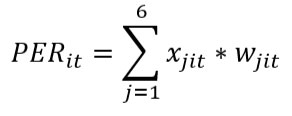
Where PERit is the result of the indicator for region i in period t, where xjit is the result of the jth activity of region i in period t, and wjit is the weighting of the jth activity within the productive structure of region i, with ∑6j=1wjit =1. Thus, the Pulse level ranges from -1.0 to 1.0, where values below zero show a negative annual change for the region, above zero a positive annual change, and values equal to zero indicate no annual change. The extreme value -1.0 is interpreted as an atypical negative annual change, and the extreme value 1.0 is interpreted as a historically high positive annual change. These annual changes do not correspond to percentage changes.
Regional Economic Pulse (PER) national aggregate and by activity
The national indicator (PERt) represents the annual change of the regional economies as a whole (it does not correspond to a percentage change). The methodology takes into account the weight of the regional productive structure within the national one, according to the aggregate value of the GDP; thus, the calculation of the indicator corresponds to the weighted sum of the results of the indicator for each region (PERit):
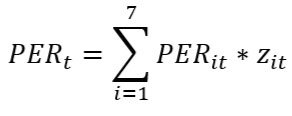
Where PERt is the result of the national aggregate indicator in period t, PERit is the result of the indicator of region i in period t, and zit is the weighting of region i in period t, within the national productive structure, with ∑i=17zit =1.
Similarly, aggregate indicators for each activity are constructed for the national total. The indicator for each national economic activity is the weighted sum of the xjit, according to the participation of activity j of region i in the national value added of activity j in period t.
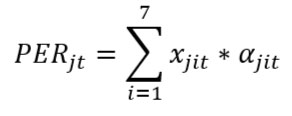
Where PERjt corresponds to the result of the indicator of activity j for the total of the seven regions in period t, xjit is the result of the indicator of activity j of region i in period t, and αjit is the weight of activity j of region i in period t, with ∑i=17αjit=1.
Statistical universe
It is made up of companies, establishments, guilds, and institutions that carry out economic monitoring activities in the geographic areas of coverage in the country.
Target population
It is made up of companies, establishments, guilds, and institutions that carry out one or more of the six economic activities to be monitored and that operate in one or more of the seven regions of the country.
Statistical units
- Observation unit: companies, establishments, guilds, and institutions of the six economic activities that operate in one of the seven regions of the country.
- Unit of analysis: companies, establishments, guilds, and institutions.
- Sampling unit: companies, establishments, guilds, and institutions of the six economic activities to be monitored in the seven regions of the country.
Sampling frame
It is formed from the business bases of the Superintendency of Corporate Affairs, Financial Superintendency of Colombia, Transportation Superintendency, Chambers of Commerce, and from the knowledge of the experts of the Regional Centers for Economic Studies on the economic, sectorial, and business composition of each region.
Sources
Companies, establishments, guilds, and national and local institutions.
Sample size
Not applicable.
Sample design
The sample design corresponds to a non-probabilistic sampling by judgment. The sample elements are selected according to the knowledge, experience, and judgment of the Pulse researcher. Banco de la República has a group of specialists who have a broad knowledge of the sectoral and business composition of each geographical area of the country, which allows them to have a clear understanding of the characteristics of the sample elements required to study the dynamics of the regional economies. Based on this knowledge and the availability of business and sector statistics provided by entities such as the Superintendency of Corporate Affairs, Financial Superintendency, Transportation Superintendency, chambers of commerce, among others, a sampling frame of the regions and economic activities to be measured is constructed.
Criteria for the selection of information sources include, among others:
- Covering the main products or groupings of products by economic activity in each region.
- Selecting the most representative companies and establishments in each economic activity by region.
- Including guilds, institutions, cooperatives, or entities that group several companies or establishments of the same activity.
In this way, the sample elements are selected under objective criteria, taking into account the thematic scope of the study, thus achieving a monthly average of one thousand one hundred (1,100) sources of information in recent years. This number may vary between periods due to the operational nature of data collection, sectoral and regional coverage adjustments, and selection criteria.
Pulse researchers are in constant communication with the representative executives and businesspeople of the region, which allows for a high degree of continuity in the responses to the perception surveys. In addition, since the interest of the measurement is to manage a panel sample, these relationships minimize the natural turnover of the sources. Complementarily, this interaction allows for obtaining specific information on explanations for certain behaviors referred to, which contributes to the analysis of results.
The weighting scheme for the indicator has three components. The first corresponds to the weighting of each of the sources of information to calculate the result by economic activity in each region, which is determined based on the participation of each source in the sample frame. The second weighting is based on the aggregate value of each activity in the region, per thematic scope, to obtain the total regional indicator. The third weighting is determined by the share of each region in the national aggregate value to calculate the results of the national total and by economic activity. The base year for the different weightings corresponds to 2013.
In order to evaluate the quality of the indicators, several strategies and procedures are established, including periodic monitoring of the responses and permanence of the different units of analysis, review and analysis of the results of the indicators, and their monitoring with respect to other available economic statistics.
Sample maintenance
- Monthly transmission of the results of the Regional Economic Pulse to the sources of the perception survey, in return for their participation.
- Submission of public economic documents of interest to businesspeople, guilds, and institutions that are sources for the Pulse.
- Permanent contact with business leaders in the regions.
- Business participation in advisory committees of Banco de la República.
- Interaction in institutional and trade union activities in the economic context.
- Dissemination of treasury services, cultural activities, and economic education offered by Banco de la República in the different regions of the country.
- Periodic validation of perception survey responses.
- Monitoring the results of the Regional Economic Pulse against available statistics on economic performance or related indicators.
- Continuous incorporation of new companies, establishments, guilds, and institutions, considering the periodic revision of the indicator, the need for sector and regional reinforcement, and the emergence of new available sources.
Auxiliary information
The Regional Economic Pulse indicators are contrasted with variables from statistical operations with regional and national thematic scope, such as the Tracking Indicator (ISE in Spanish), GDP, Monthly Manufacturing Survey with Territorial Approach (EMMET in Spanish), Monthly Survey of Vehicle Retail Trade and Commerce (EMCM in Spanish), and Departmental Quarterly Economic Activity Indicator (Indicador Trimestral de Actividad Económica Departamental, ITAED in Spanish) of the National Administrative Department of Statistics, Banco de la República's monthly index of economic activity (IMAE in Spanish) and Monthly Survey of Economic Expectations (EMEE in Spanish), Consumption Index of Bancolombia, SICOM Statistical Bulletin of the Ministry of Mines and Energy, Traffic Operation and Toll Collection of the National Infrastructure Agency, Colombian Electricity Information System of the Mining and Energy Planning Unit, and Statistics of aeronautical activity of the Civil Aviation Authority of Colombia, among others.
Geographic coverage
Regional and national
Reference period
Monthly. The results of the Regional Economic Pulse refer to the calendar month immediately preceding the publication of the results.
Collection period
The information for the Regional Economic Pulse is collected during the first 12 business days of the month immediately following the reference period.
Collection method
Perception surveys conducted through different mechanisms: personal interviews, telephone, instant messaging, and e-mail; additionally, digital downloads of information from the official websites of different entities.
Disaggregation of results
Geographic disaggregation:
- Antioquia
- Southwest (Valle del Cauca, Cauca, and Nariño)
- Caribbean (Atlántico, Bolívar, Magdalena, Córdoba, Cesar, Sucre, La Guajira, and San Andrés)
- Northeast (Santander, Norte de Santander, and Boyacá)
- Central Coffee Region (Caldas, Quindío, Risaralda, Tolima, Huila, and Caquetá)
- Llanos Orientales (Meta and Casanare)
- Bogotá (Bogotá and Cundinamarca)
- National aggregate
Disaggregation by economic activity:
- Trade
- Industry
- Transportation
- Agriculture and Livestock
- Financial
- Housing
Frequency of delivery of results
Monthly.
Periods available for results
Regional results
- Regional Economic Pulse of the Southwest and Antioquia regions since December 2012.
- Regional Economic Pulse of the Northeast, Caribbean, Central Coffee Region, and Llanos Orientales regions since December 2015.
- Regional Economic Pulse of the Bogotá region since January 2019.
National results
- Regional Economic Pulse national aggregate since December 2012.
- National Regional Economic Pulse of industry and commerce activities since December 2012.
- National Regional Economic Pulse of agricultural, transportation, housing, and financial activities since December 2015.
Dissemination and access media
Banco de la República's web portal (www.banrep.gov.co), Banco de la República's social networks, and through institutional e-mails.
Document control
Prepared by: Regional Branches for Economic Studies Section
Reviewed by: Head of Regional Branches for Economic Studies, Technical and Economic Information Department (DTIE in Spanish)
Approved by: Director, Technical and Economic Information Department (DTIE)
Date of approval: 13 December 2023
Change history: Version 1 (13/12/2023). Initial version of the document.