In Riohacha, Banco de la República (the Central Bank of Colombia) explains its Strategy to strengthen the Provision of Cash to Citizens
On August 10, there will be a meeting with commercial banks, unions, and trade representatives to socialize the actions implemented for the supply of banknotes and coins, and the new services that will be available in the city.
In Riohacha, as in other cities, Banco de la República is carrying out a series of actions to continue strengthening the circulation of cash in the required quantity, quality, and timeliness according to the commercial and financial activity in different regions of Colombia.
In this regard, Banco de la República works together with other channels for the provision of cash involving third parties. Among these are financial agents such as credit institutions that are authorized to receive deposits in local currency and are obliged to have banknotes and coins in the quality and quantities required by citizens.
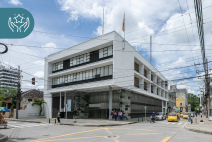
- In the case of Riohacha, the discussion forum will be held in the hall at the Cultural Agency of Banco de la República, with the participation of commercial banks, unions, the Chamber of Commerce, and other stakeholders to present the various actions that are being implemented and the services that will be offered in the city:
- Cash requirements in Riohacha will be met through commercial banks and Complementary Cash Centers (CCE in Spanish) in a scheme similar to the one that has operated for several years in some cities in the country where the bank does not have a treasury office.
- The city currently has one CCE located at Calle 7 # 3-08 that is operated by Brinks, a cash management company, which provides the service of supplying small value denomination banknotes and metallic coins to financial institutions, clients of the securities transportation company that provides services through the CCEs, and third parties (chain stores, public transportation services, toll booths, among others). Likewise, it provides the service of receiving deposits only from commercial banks.
- Credit institutions authorized to receive deposits in local currency must have the banknotes and coins they require to adequately service their operations. Thus, in such institutions, businesses and citizens may obtain cash in all denominations, subject to the different contracts entered into with them.
A contracting process is currently underway to expand the CCE’s services so as to include the exchange of large value denomination banknotes in damaged condition (COP 10,000, COP 20,000, COP 50,000, and COP 100,000) in exchange for large value denomination banknotes fit for circulation. The city will also have a new CCE that will carry out exchange transactions of small and large value denominations, as well as exchange transactions at the cash window.
Finally, it is important to mention that Banco de la República continues evaluating different alternatives to strengthen the distribution of small value denomination cash and expand the service channels for citizens and small traders in Riohacha by implementing a pilot test of Cash Exchange Points.
The service at these points will allow citizens to exchange cash through collection and payment service providers, delivering small value denomination banknotes (COP 2,000 and COP 5,000) in fit condition in exchange for large value denomination banknotes in any condition (fit or damaged) and small value denomination banknotes in damaged condition.