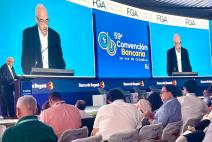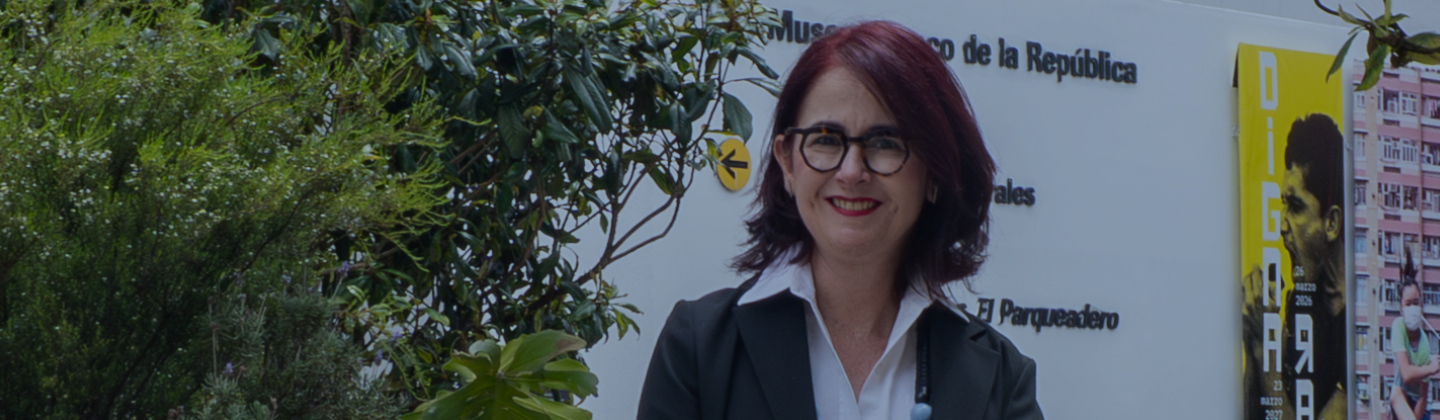
Juliana Restrepo Tirado is Chief Officer for Cultural Affairs of Banco de la República (the Central Bank of Colombia) since May 25, 2026. Her scope of work includes 29 cultural centers in the country with libraries and museums.
Ms. Restrepo-Tirado is a publicist from the Universidad Pontificia Bolivariana in Medellín. She studied Philosophy and Literature at the same institution, holds a master’s degree in philosophy from the Pontificia Universidad Javeriana, and has a master’s degree in media from EGS (the European Graduate School in Switzerland).
Her extensive experience in the cultural sector, both public and private, includes having been director of the National Museum of Colombia, director of the District Institute for the Arts (Idartes), executive director of the 43rd National Artists’ Salon that took place in Medellín in 2013, and director of the Museum of Modern Art of Medellín (MAMM) among others. She also has a solid editorial and digital experience in Colombia and Latin America. In this field, her time at Publicaciones Semana stands out, where she led the cultural unit 'Obra Semana', Foros Semana, and the Arcadia project. She was also leader of digital products at the Casa Editorial El Tiempo.
Ms Restrepo-Tirado was invited as a speaker in the first version of TEDx Bogotá in 2010. She received the Aló Mujer BIT award in 2009, and has worked as a professor at the Universidad Nacional de Colombia, at the Colombian School of Design of Medellín, and at the Institute for the Arts in Medellín.
Her achievements include the inauguration and implementation of the Cinema District of Bogotá and the new headquarters of the Galería Santa Fe, the creation of the program of Festivals in the Neighborhoods by Idartes, the realization of the 25th version of Rock al Parque, and the construction and opening of the new headquarters of the Museum of Modern Art of Medellín in 2009, among others.
Banco de la República's Cultural Mission
Banco de la República has developed over the years a cultural mission conceived as a long-term initiative aimed at contributing to the management of the nation's cultural heritage, promoting access to knowledge, and strengthening the sense of citizenship. It is through these two major areas of work—economic and cultural—that the Bank fully fulfills its mission of contributing to the well-being of Colombians.
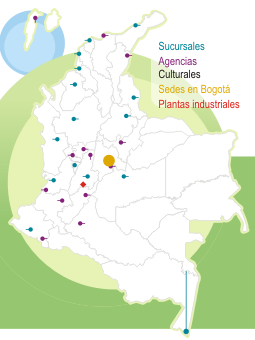
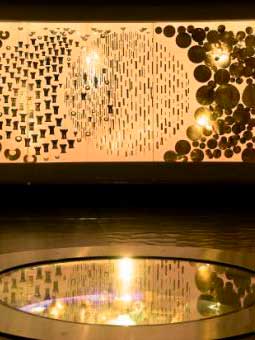
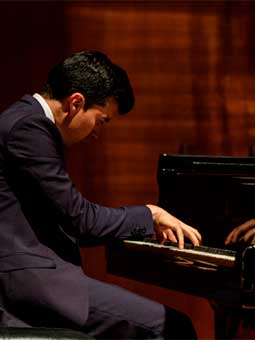
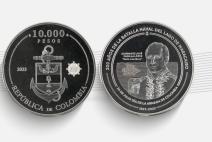
Through a cultural network across twenty-nine cities across the country, the Bank has made cultural management a sustainable, accessible, and inclusive model that promotes reflection and critical thinking and serves as a benchmark for other institutions as well. To achieve these objectives, it continuously and efficiently carries out musical activities and initiatives related to its visual arts, documentary heritage, numismatic, philatelic, archaeological, and ethnographic collections.
Banco de la República's national cultural project is implemented in the cities of Armenia, Barranquilla, Bogotá, Bucaramanga, Buenaventura, Cali, Cartagena, Cúcuta, Florencia, Girardot, Honda, Ibagué, Ipiales, Leticia, Manizales, Medellín, Montería, Neiva, Pasto, Pereira, Popayán, Quibdó, Riohacha, San Andrés, Santa Marta, Sincelejo, Tunja, Valledupar, and Villavicencio, as well as in the virtual sphere through its collections and programming.
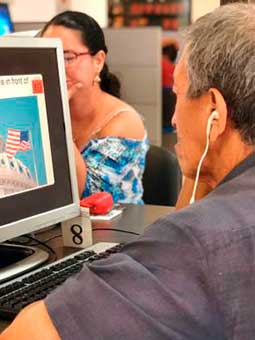
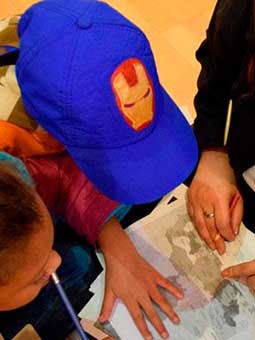
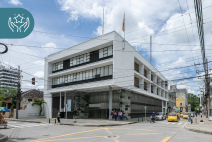
Each of these cultural centers is a space designed according to the identity and needs of its region and its audiences; likewise, its collections, cultural services, and ongoing programming are tailored to those needs. By operating as a networked system, cultural centers carry out their work through constant interaction, with the aim of providing more comprehensive and integrated services to their communities.
Discover the emblematic cities within this cultural network that lead cultural management initiatives.