Servicios
|
CURRENT SITUATION OF THE COLOMBIAN ECONOMYThis is the first edition of a new publication by the Governor of the Central Bank of Colombia. It is addressed to citizens, analysts, and domestic and foreign investors interested in learning about the most recent events in the Colombian economy, and their…
|
|
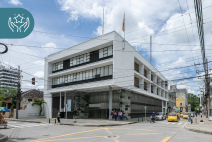
As the community knows, Banco de la República holds a free-use contract with the Society of Public Improvements of Barranquilla to use the Amira de la Rosa Theater since 19 June 1980. Since then, the venue has been administered and maintained by the Central Bank for cultural activities, holding…
|
|
Preliminary data subject to revision.
|
|
Purchase and Sale Prices for Precious Metals
|
|
Preliminary and delayed Colombian GDP reports are replaced with optimal in-sample now-casts of true GDP figures derived from a model for data revisions. The new GDP time series is augmented with optimal out-of-sample forecasts and back-casts of the true GDP figures derived from the same model.…
|
|
Hard to believe it has been 25 years since the first central bank modeling workshop. The title of the first workshop was “Monetary Policy Under Uncertainty”. It was the time of the inflation-targeting pioneers. In addition, at the beginning of 1990s, the Bank of Canada developed…
|
|
Hard to believe it has been 25 years since the first central bank modeling workshop. The title of the first workshop was “Monetary Policy Under Uncertainty”. It was the time of the inflation-targeting pioneers. In addition, at the beginning of 1990s, the Bank of Canada developed…
|
|
Hard to believe it has been 25 years since the first central bank modeling workshop. The title of the first workshop was “Monetary Policy Under Uncertainty”. It was the time of the inflation-targeting pioneers. In addition, at the beginning of 1990s, the Bank of Canada developed…
|
|
Emerging and Frontier Markets: Capital Flows, Resiliency, Risks, and Growth - Supported by the National Bureau of Economic Research (NBER), the Latin American Reserve Fund (FLAR), and Banco de la República (The Central Bank of Colombia)
|
|
See additional information in "The Board of Directors of Banco de la República notifies updates to some of its calendar of monthly meetings and monetary policy announcements"
|
|
See additional information in "The Board of Directors of Banco de la República notifies updates to some of its calendar of monthly meetings and monetary policy announcements"
|
|
See additional information in "The Board of Directors of Banco de la República notifies updates to some of its calendar of monthly meetings and monetary policy announcements"
|
|
See additional information in "The Board of Directors of Banco de la República notifies updates to some of its calendar of monthly meetings and monetary policy announcements"
|
|
This paper quantifies the welfare effects of decentralisation in Colombia, using a multiregional CGE model. We investigate to what extent will the Colombian population be better off when goods such as health and education, are delivered locally as against centrally. A provision scheme based on the…
|
|
Banco de la República establishes the benchmark interest rate based on an analysis of the current state of the economy, its outlook, and developments in the inflation forecast with respect to the target. If this assessment indicates there are risks of inflation persistently being above…
|
|
Monetary policy in Colombia comprises the actions taken by Banco de la República (the Central Bank of Colombia) to comply with its constitutional mandate to maintain the purchasing power of the currency in coordination with the general economic policy.
|
|
AbstractThis work contributes to the reconstruction of the demographic and economic data of the department of Córdoba for a long period of time, which allows to a great extent to cover the seventy years of existence of this territory. We foundthat the population growth of Córdoba washigher than…
|