Book Kemmerer y el Banco de la República. Diarios y documentos (Kemmerer and Banco de la República: Journals and Documents)
Los libros y capitulos de libros que se publiquen o editen, pertenecen a sus respectivos autores y, por ende, no comprometen necesariamente a la Entidad, a menos que así se indique en forma expresa. Para más información consulte nuestro Aviso Legal.
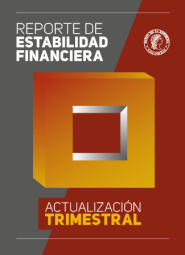
The book Kemmerer y el Banco de la República. Diarios y documentos published in 2023, can be downloaded from Banco de la República’s Repository, as well as from Virtual Library.
Introduction to Chapter 1: “Autobiografía y trabajo consultivo económico de Edwin Walter Kemmerer” (Autobiography and Economic Advisory Work by Edwin Walter Kemmerer)
This chapter publishes the autobiography written in 1944 by Professor Edwin Walter Kemmerer, i.e., the year following his retirement from Princeton University in 1943 and his 1926 speech as president of the American Economic Association.
The first text is of great historical value as it remains unpublished to date, even in the United States. In addition, it will be very useful information for historians because it provides a broad view of the intellectual formation, experience, and mentality of perhaps the leading American advisor who, at the beginning of this century, helped to develop an appropriate institutional environment for the international expansion of U.S. capital, especially in Latin America.
Finally, this autobiography serves scholars of Colombian economic history, as it covers facts from 1918, thus including almost all of Kemmerer's experiences as an advisor before his first Mission to our country in 1923, except for the one to Guatemala in 1919 [...].
Introduction to Chapter 2: “Diarios y documentos de la primera Misión Kemmerer” (Journals and Documents from the first Kemmerer Mission)
This chapter publishes documents related to the first Mission led by Professor Edwin Walter Kemmerer to Colombia in 1923. The idea for this first Mission arose from the Colombian government's interest in obtaining advice, among other economic issues, on the use of funds from the U.S. indemnification for the loss of Panama, whose first payment of five million dollars occurred in September 1922.
On this subject, Professor Kemmerer later commented in a speech published in this chapter: "A strong public sentiment in Colombia demanded that these Panama moneys be used only for lasting public works, especially the construction of railroads, and for the creation of a central bank of issue and rediscount" [...]
Introduction to Chapter 3: “Diarios de E. W. Kemmerer en su segunda Misión” (Journals and Documents from the second Kemmerer Mission)
Even more than the first mission, the Kemmerer Mission to Colombia in 1930 was seen as the main step to obtaining U.S. loans, which were becoming increasingly difficult. In addition, it was seen as a legitimizing factor for the budget cuts and tax increases that were to be implemented.
In the opinion of historian Paul Drake (1984): "Even more so than during the first Mission, the second occurred primarily for political reasons" (p. 25). In support of this, Drake argues that the Colombian government's main objective in inviting the "Money Doctor" was to generate confidence among U.S. bankers in the fact that Colombia was making all the reforms required to improve its public finances. The country was interested in having access to U.S. capital, which had been drastically reduced since 1928. In 1930, the U.S. banks sent Howard Jefferson, who had been part of the first Kemmerer Mission, to Bogotá to prepare a report on the fiscal situation. The members of the second Mission actively collaborated with him. Thus, Drake (1984) states: "[...] indirectly and directly, the second Kemmerer visit became much more committed than the first to an American loan" [...].
Introduction to Chapter 4: “Reacciones de la prensa nacional a las misiones Kemmerer en Colombia (1923 y 1930)” (Reactions of the National Press to the Kemmerer Missions in Colombia (1923 and 1930))
The history of Kemmerer and Banco de la República (the Central Bank of Colombia) presents several facets that must be appreciated to understand the Issuer's origin and its peculiar characteristics. The journals and documents gathered in this volume introduce, in addition to the economic aspect, the little explored human facet in the history of Banco de la República.
This chapter presents press material that faithfully reflects the reactions of journalists, critics, and the public to the two Kemmerer missions. Opinions on the establishment and organization of Banco de la República show economic, political, and human dimensions that have dissolved over time. Today, these proportions are only partially visible, giving the impression that the organization of Banco de la República was simple and efficient.
Newspapers tell a different story. The Colombian press analyzes, criticizes, discusses, and informs and, as a result of this complex democratic process, helps Banco de la República approach the national economy's dissimilar realities. Thanks to the press, it is possible to appreciate the disagreements surrounding the establishment and organization of the Bank, as well as the different economic, political, and social interests of the time. All this makes these materials extremely valuable documents in the history of the Issuer [...]