Regulations and Foreign Exchange Transactions: Basic Concepts
1. Who are considered residents and non-residents for foreign exchange purposes?
The following are considered residents:
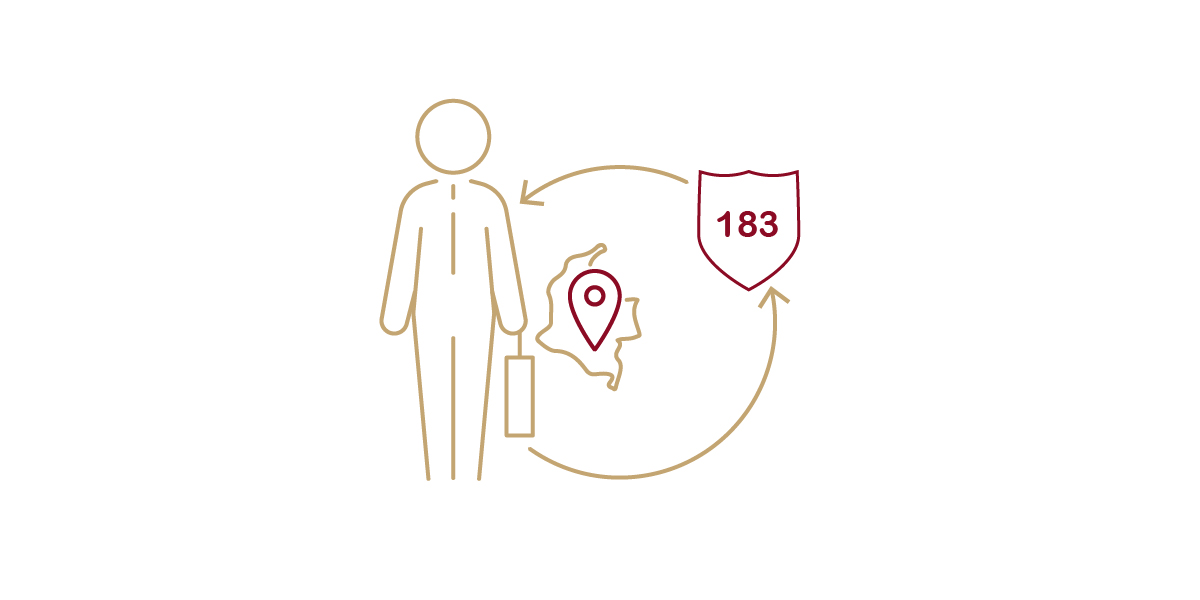
- Colombian nationals living in the national territory or foreigners who remain continuously or discontinuously in the country for more than 183 calendar days, including the days of entry and exit of the country, during a period of 365 consecutive calendar days.
- Public law institutions and companies, including non-profit organizations, that have their principal place of business in the country. Likewise, branches of foreign companies established in the country have the status of residents for purposes of the foreign exchange regime.
The following are considered non-residents:
- Colombian nationals or foreigners who do not comply with the condition of permanence foreseen for residents.
- Companies that do not have their principal place of business within the national territory, including non-profit organizations.
- Other corporations without legal personality or domicile within the national territory.
Example: Harry Walker, born in the United States, has been living in Colombia for two years; therefore, for purposes of the foreign exchange regime, he is considered a Colombian resident.
Regulatory source: Article 2.17.1.2 of Decree 1068 of 2015, as amended by Decree 119 of 2017 (only in Spanish).
2. What is a Foreign Exchange Transaction?
The following are considered foreign exchange transactions:
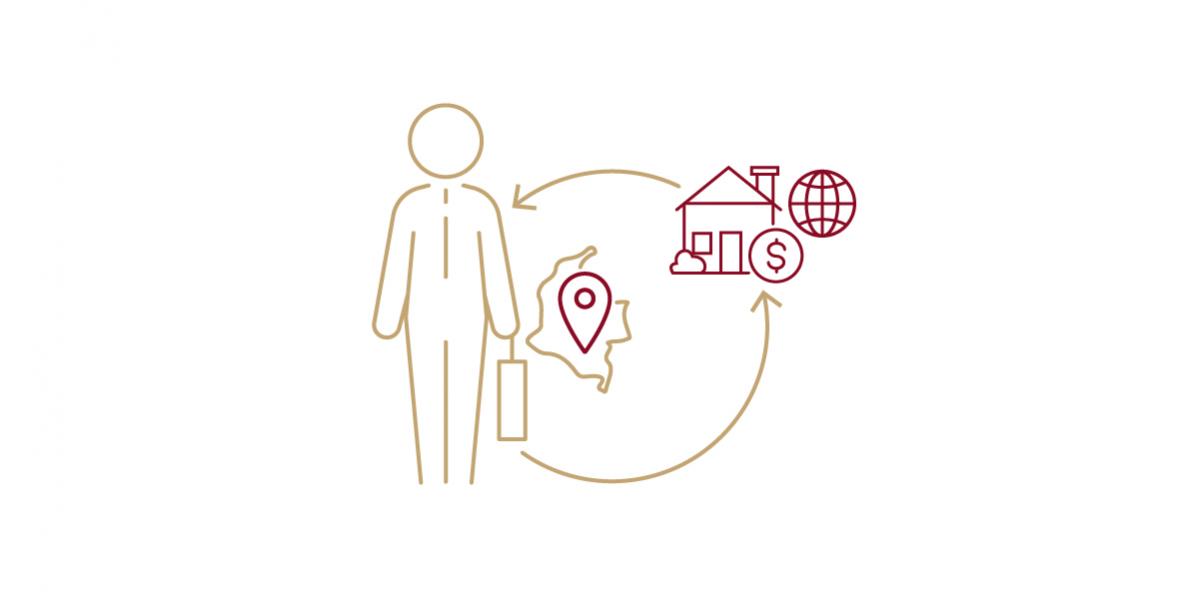
- The acts, contracts, and transactions of acquisition, holding, or disposition of goods or rights abroad carried out by residents, and the acts, contracts, and transactions of acquisition, holding, or disposition of goods or rights in Colombia by non-residents.
Example: Daniel Arbeláez, a Colombian resident, buys a house in the United States from John Lauren, a US resident (non-resident for purposes of the foreign exchange regime) therefore, acquiring an asset abroad.
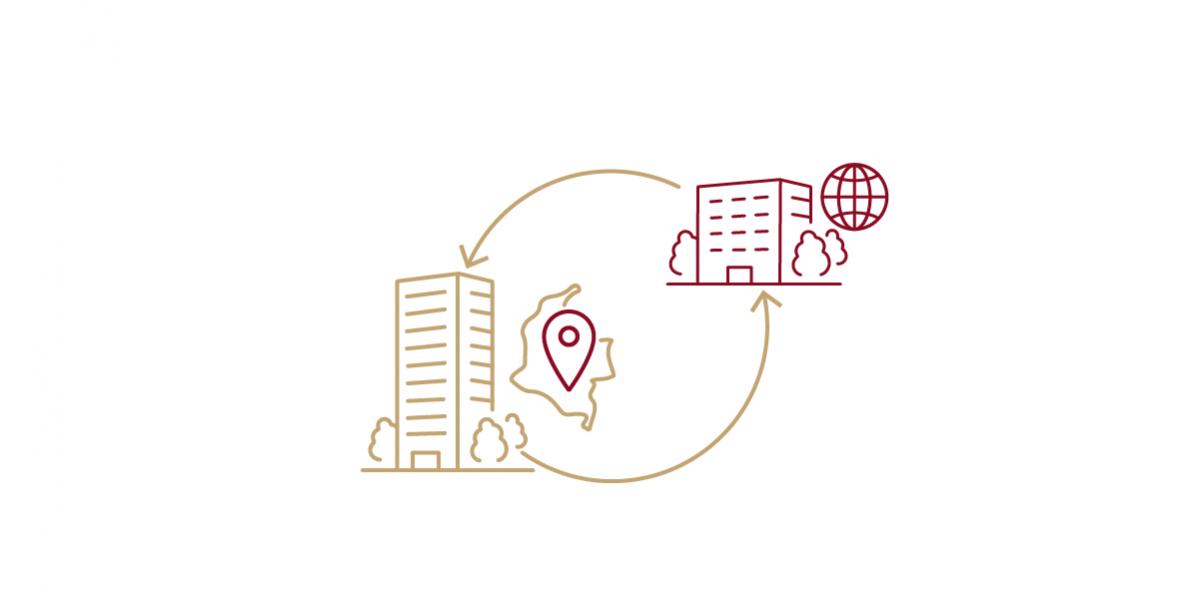
- The acts, contracts, and transactions by which a resident becomes or may become a creditor or debtor of a non-resident and the disposition acts of the rights or obligations derived thereof.
Example: A Swiss company (non-resident) grants a loan in foreign currency to the Colombian company Durán Consultorías Financieras Ltda. (resident).
- The holding, acquisition, or disposition of assets in foreign currency by residents, or, in the case of non-residents, the holding, acquisition, or disposition of asset in Colombian legal currency.
Example: Alejandra García, a resident from Spain, opens an account in Colombian pesos in Colombia.

- The entry or exit of foreign currency or Colombian legal tender and securities representing the same.
Example: Javier Duque, a Colombian resident, travels to the United States with some foreign currency in cash for his personal expenses.
- The acts by which obligations are extinct between residents and non-residents.
Example: the resident law firm Pérez y Escobar Asociados receives payment from a company in Mexico City, Órale Cuate, for a legal advice contract, extinguishing the obligation.

Regulatory source: Article 04 of Law 09 of 1991 (only in Spanish).
3. What does it mean that a foreign exchange transaction must be negotiated and transferred through the foreign exchange market?
It is a transaction whose negotiation or transfer of foreign currency must be made through foreign exchange market intermediaries or foreign currency bank accounts.
Example: Juan, who is a non-resident for foreign exchange purposes, buys stocks in the company ABC S.A.S., located in Colombia. As foreign direct investment transactions are within those mentioned in Article 41 of External Resolution 01 of 2018, Juan (investor), the legal representative of ABC S.A.S., or its acting attorneys must negotiate and transfer the foreign currency for the purchase of the stocks through the foreign exchange market.
Regulatory sources: Articles 36 and 41 of External Resolution 01 of 2018 of the Board of Directors of Banco de la República (the Central Bank of Colombia) (only in Spanish).
4. Which transactions must be negotiated and transferred through the foreign exchange market?
The following:
- Imports and exports of goods
Example: The Colombian resident company, Doña Rosa S.A.S., exports flowers to several companies abroad.
- External debt transactions carried out by residents, as well as financial costs associated with them
Example: The company Zapatero a tus zapatos S.A. requests a loan for USD 500,000 from a foreign bank.
- Foreign investment in Colombia, as well as the associated returns
Example: Lysa Harris, a US resident, buys an apartment in Cartagena.

- Colombian investment abroad, as well as yields associated with it
Example: Maria Rivera, a Colombian resident, purchases 1,000 shares in the Panamanian company Relojes Tic2 Inc.
- Financial investments in securities issued and assets located abroad, as well as returns associated with them, except when the investments are made with foreign currencies from transactions that should not be negotiated through the foreign exchange market.
Example: Andrés Osorio, a Colombian resident, opens a certificate of deposit (CDT in Spanish) in a bank in Miami (United States).
- Guarantees and sureties in foreign currency
Example: The Colombian company Transportes y Mercancías S.A.S. (debtor) requests a loan from Banco Santafé S.A. (Foreign Exchange Market Intermediary, [IMC in Spanish], creditor) for COP 1 b to purchase trucks for the company (local loan). As a condition for granting this loan, IMC Banco Santafé S.A. required a foreign currency guarantee from Transportes y Mercancías S.A.S. The English company Christopher Brown Inc. serves as guarantor.

- Derivatives transactions
Example: Harinas y Harinas S.A., a Colombian resident company, needs to mitigate the risk of price variation in Canadian wheat inventories that it must import and pay in foreign currency to be used in its production within three months. For this purpose, it chooses Comisionista de Bolsa América Ltda. (IMC), which, through a hedge, agrees as of today the future price in (USD 50) at which it will be able to buy wheat in 3 months.

Regulatory sources: Articles 52 and 53 of External Resolution 01 of 2018 of the Board of Directors of Banco de la República (only in Spanish) Article 41 of External Resolution 01 of 2018 of the Board of Directors of Banco de la República, Article 2.17.1.4 of Sole Decree 1068 of 2015, as amended by Decree 119 of 2017 (only in Spanish).
5. What are free market exchange transactions?
These are foreign exchange transactions that are not mandatory to be negotiated and transferred, i.e., currencies for these transactions do not have to be negotiated through the foreign exchange market on a mandatory basis.
They can be negotiated voluntarily before the foreign exchange market intermediaries, for which the resident who negotiates the foreign currency must provide the minimum data information for services, transfers, and other concepts (exchange statement).
Example: The Colombian resident company Atención domiciliaria provides call center services to coordinate ambulance services in Illinois, USA. For this service, the US-based company "Your Ambulance" transfers USD 20,000,000 monthly to Colombia. Despite being operations excluded from the exchange regime given that it is an export of services, "Your Ambulance" transfers the funds using a foreign exchange market intermediary.
Regulatory source: Article 41 of External Resolution 01 of 2018 of the Board of Directors of Banco de la República (only in Spanish).
6. What are foreign currency bank accounts?
These are bank accounts abroad by which residents channeled i) foreign exchange transactions that must take place through the foreign exchange market, and ii) domestic transactions paid in foreign currency. Additionally, once registered, free market transactions can be carried out.
Example: Papelería de Latinoamérica S.A.S. has an account at Banco Hispano de Panamá through which it desires to receive payments for the export of goods to its Panamanian customers and to pay for imports from Panamanian suppliers. This account must be registered with Banco de la República as a foreign currency bank account.
Regulatory sources: Article 37 of External Resolution 01 of 2018 of the Board of Directors of Banco de la República (only in Spanish) and Chapter 08 of the External Regulatory Circular DCIP-83 of Banco de la República (only in Spanish).
7. Who are the Foreign Exchange Market Intermediaries (IMCs)?
- Banks
- Financial corporations
- Commercial finance companies
- Financiera de Desarrollo Nacional, FDN (National Development Finance Agency)
- Bancoldex (Colombian Foreign Trade Bank)
- Financial cooperatives
- Stock brokerage firms
- Special Financial Services and Foreign Exchange Brokerage Companies (SICSFE in Spanish)
- Companies Specializing in Electronic Deposits and Payments (SEDPE in Spanish)
- Financiera de Desarrollo Territorial, Findeter (Financial Corporation for Territorial Development S.A.)
- Fondo para el Financiamiento del Sector Agropecuario, Finagro (Fund for the Financing of the Agricultural Sector)
- Instituto Colombiano de Crédito Educativo y Estudios Técnicos en el Exterior, ICETEX (Colombian Institute for Student Loans and Technical Studies Abroad)
- Empresa Nacional Promotora del Desarrollo Territorial, ENTerritorio, and
- Fondo Nacional del Ahorro, FNA.
Regulatory source: Article 07 of External Resolution 01 of 2018 of the Board of Directors of Banco de la República (only in Spanish).
8. What is the document keeping obligation?
For exchange purposes, Banco de la República does not require submission of supporting documents for exchange transactions. However, residents who carry out exchange transactions are obliged to keep the documents evidencing the amount, characteristics, and other conditions of the transaction, as well as the origin or destination of the resources, as the case may be, for a period equal to the expiration or prescription period of the sanctioning action for violations to the foreign exchange regime.
Said documents must be submitted to the institutions in charge of compliance of the foreign exchange regime that require them or within the administrative proceedings initiated by said entities to determine the commission of foreign exchange violations.
Example: In August 2023, MACONDO S.A.S. imported a container with fabrics to produce garments in Colombia and paid this transaction to the foreign supplier through its foreign currency bank accounts. MACONDO S.A.S. shall keep the documents evidencing the importation and payment of the fabrics.
Regulatory source: Article 90 of External Resolution 01 of 2018 of the Board of Directors of Banco de la República (only in Spanish).
9. Can non-residents open accounts in foreign currency or in Colombian pesos with Foreign Exchange Market Intermediaries (IMC)?
Yes, non-residents can open bank accounts in foreign currency or in Colombian pesos with IMCs, without having to register with Banco de la República.
Example: Michael Hertz, a non-resident for foreign exchange purposes, constantly travels to Colombia for tourism, so he decides to open an account in Colombian pesos with a foreign exchange market intermediary in Colombia to transfer funds from his foreign account to pay for his hotel and travel expenses in Colombian pesos.
Regulatory source: Article 10.4.1 of Chapter 10 of Banco de la República’s External Regulatory Circular DCIP-83 (only in Spanish).
10. What is a domestic transaction?
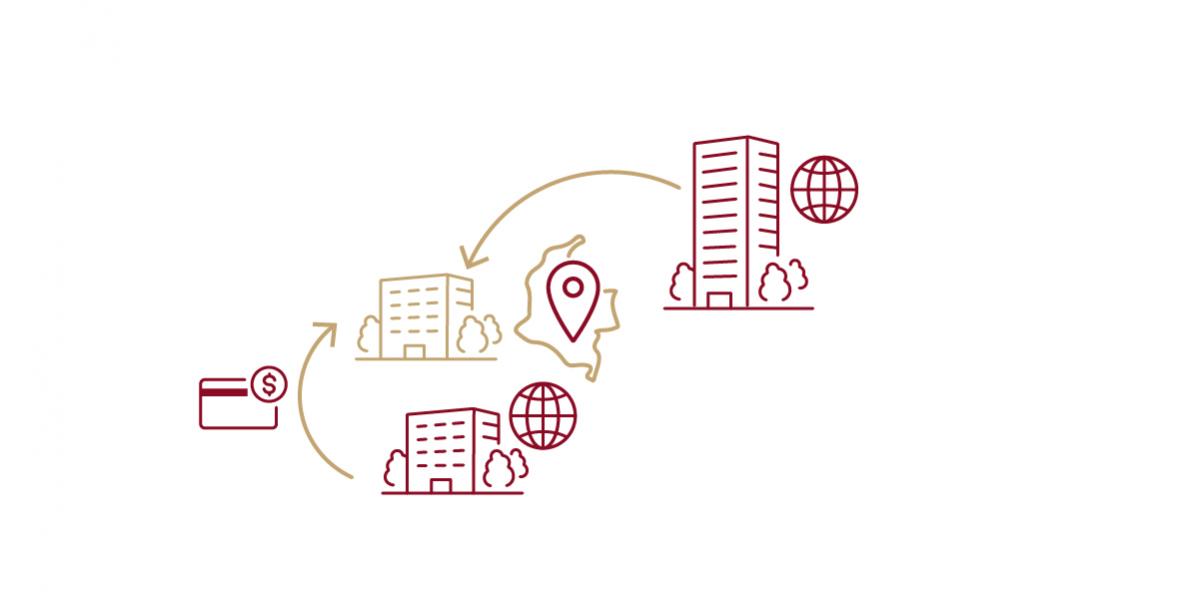
These are transactions between residents that must be paid in Colombian pesos. Exceptionally, these transactions may be paid in foreign currency using foreign currency bank accounts.
Example: Carlos López will sell a house in Bogotá to Cecilia Cárdenas, both residents in Colombia; therefore, it is understood that this transaction is considered domestic and must be paid in Colombian pesos.
Regulatory sources: Article 2.17.1.3 of Decree 1068 of 2015, as amended by Decree 119 of 2017 (only in Spanish), Articles 37 and 93 of External Resolution 01 of 2018 (only in Spanish) and Chapter 8 of External Regulatory Circular DCIP-83 of Banco de la República (only in Spanish).
11. Is there an official exchange rate in Colombia?
No, in Colombia the exchange rate is set by the foreign exchange market.
Example: Liliana Muñoz, a Colombian resident, intends to purchase 3,000 euros from an IMC to transfer them abroad for an import of goods. Liliana can check the rates offered by the different foreign exchange market intermediaries and buy the foreign currency from the one offering the lowest rate.
Regulatory source: Article 38 of External Resolution 01 of 2018 of the Board of Directors of Banco de la República (only in Spanish).
12. Can foreign currency be exchanged at Banco de la República?
No, Banco de la República does not buy or sell foreign currency to or from individuals.
Example: If a relative gave Ms. Cecilia Gómez a USD 100 banknote, she can go to currency exchange traders to sell that foreign currency and receive the equivalent in Colombian pesos.
 Article 84 of External Resolution 01 of 2018 of the Board of Directors of Banco de la República (only in Spanish).
13. Which foreign currency transactions are authorized by the foreign exchange regime between a parent company domiciled abroad and its branch based in Colombia?
Between a parent company incorporated abroad and its branch based in Colombia, only the following transactions in foreign currency are allowed:
 Transfer of foreign branch capital.
 Reimbursement of profits and allocated or supplementary capital.
 Payment for reimbursable foreign trade transactions of goods, in accordance with customs and tax regulations, and,
 Payment for services, in accordance with tax regulations.
Example: MARIPOSA Ltda., based in Panama, decides to open a branch in Colombia for its commercial transactions, for which it transfers, through a foreign exchange market intermediary, five million dollars (USD 5,000,000) as foreign branch capital.
Regulatory source: Article 56 of External Resolution 01 of 2018 of the Board of Directors of Banco de la República (only in Spanish).
14. Is it possible to offset transactions that should be negotiated and transferred through the foreign exchange market?
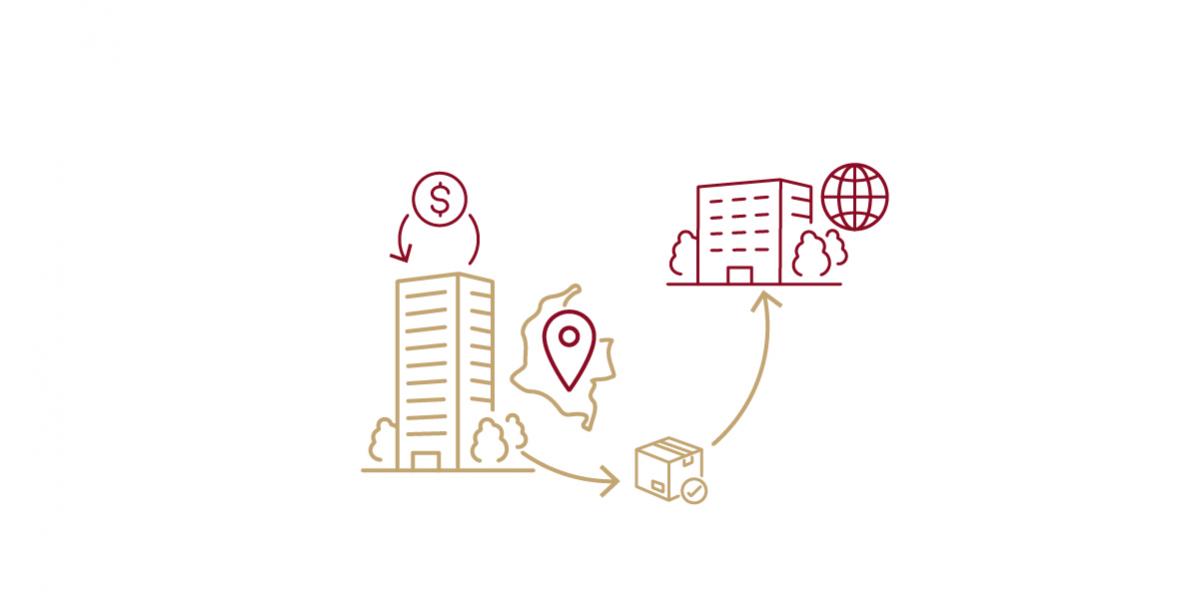
No. Each transaction that must be negotiated and transferred through the foreign exchange market must be negotiated independently before the foreign exchange market intermediaries or be done independently from the foreign currency bank accounts.
Example: ROCA S.A.S., resident in Colombia, exports goods to PALMERA Ltda. in Costa Rica, for which ROCA S.A.S. receives continuous payments for the export of goods through foreign exchange market Intermediaries.
Likewise, PALMERA Ltda. is a creditor of ROCA S.A.S. for foreign credit transactions; therefore, payments for their liabilities are also negotiated and transferred through the foreign exchange market between these two companies.
Given that it is not possible to offset transactions subject to the foreign exchange regime, ROCA S.A.S. in Colombia and PALMERA Ltda. in Costa Rica cannot cross accounts for export of goods and foreign credit transactions.
Regulatory source: Article 41 of External Resolution 01 of 2018 of the Board of Directors of Banco de la República (only in Spanish).