How is the inflation target achieved?
The Bank compares both observed and expected inflation with the target and assesses the current and projected state of economic activity. If inflation (observed or expected) is above the target because economic spending exceeds productive capacity, the Bank must raise the policy interest rate so that inflation returns to the target. Inflation can also exceed the target due to factors that, although transitory, such as a drought, cause more persistent price pressures. In this case, the Bank must also increase the policy interest rate to bring inflation back to the target.
Related Blog Banrep:
The Inflation Target and its Importance for Price Stability
See the complete content
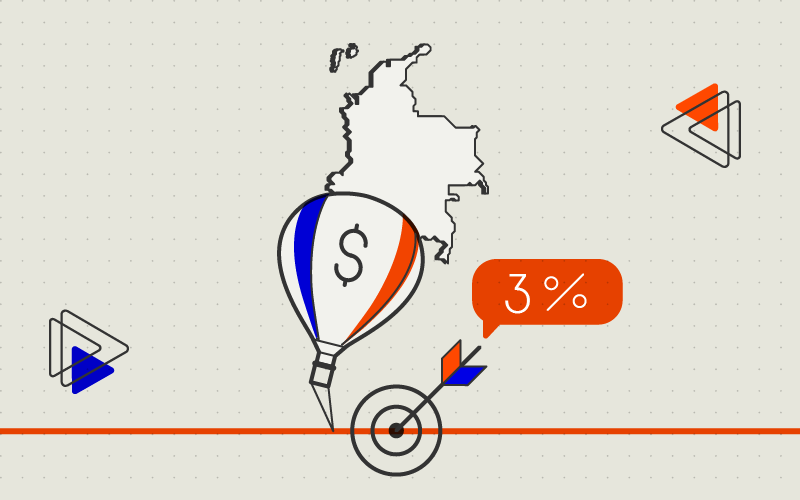
Inflation is the generalized and sustained increase in the prices of goods and services. When inflation is high, money loses its value rapidly, which affects all sectors of the economy, especially households, as their purchasing power declines. This means that with the same amount of money, a household can buy fewer basic goods such as food, and access fewer services such as transportation and rent. Additionally, when inflation is not only high but also volatile, it hinders the financing of long-term projects that require a significant investment of resources such as education, entrepreneurship, and home purchases....