Over the past decades, Colombian women have experienced profound transformations in their lives in terms of access to higher education, participation in the labor market, and reproductive decisions. However, these advances have not been fully translated into equivalent reorganization within households. The persistence of cultural norms regarding gender roles continues to shape the distribution of unpaid care work at home.
In a recent publication in the series Cuadernos de Historia Económica of Banco de la República (the Central Bank of Colombia), Bank researchers Juliana Jaramillo Echeverri and Andrea Otero Cortés, among other co-authors, document changes in cultural perceptions of gender roles in Colombia. The study is based on the National Time Use Survey (ENUT in Spanish) for 2016–2017 and 2020–2021, which includes questions on gender roles within households..
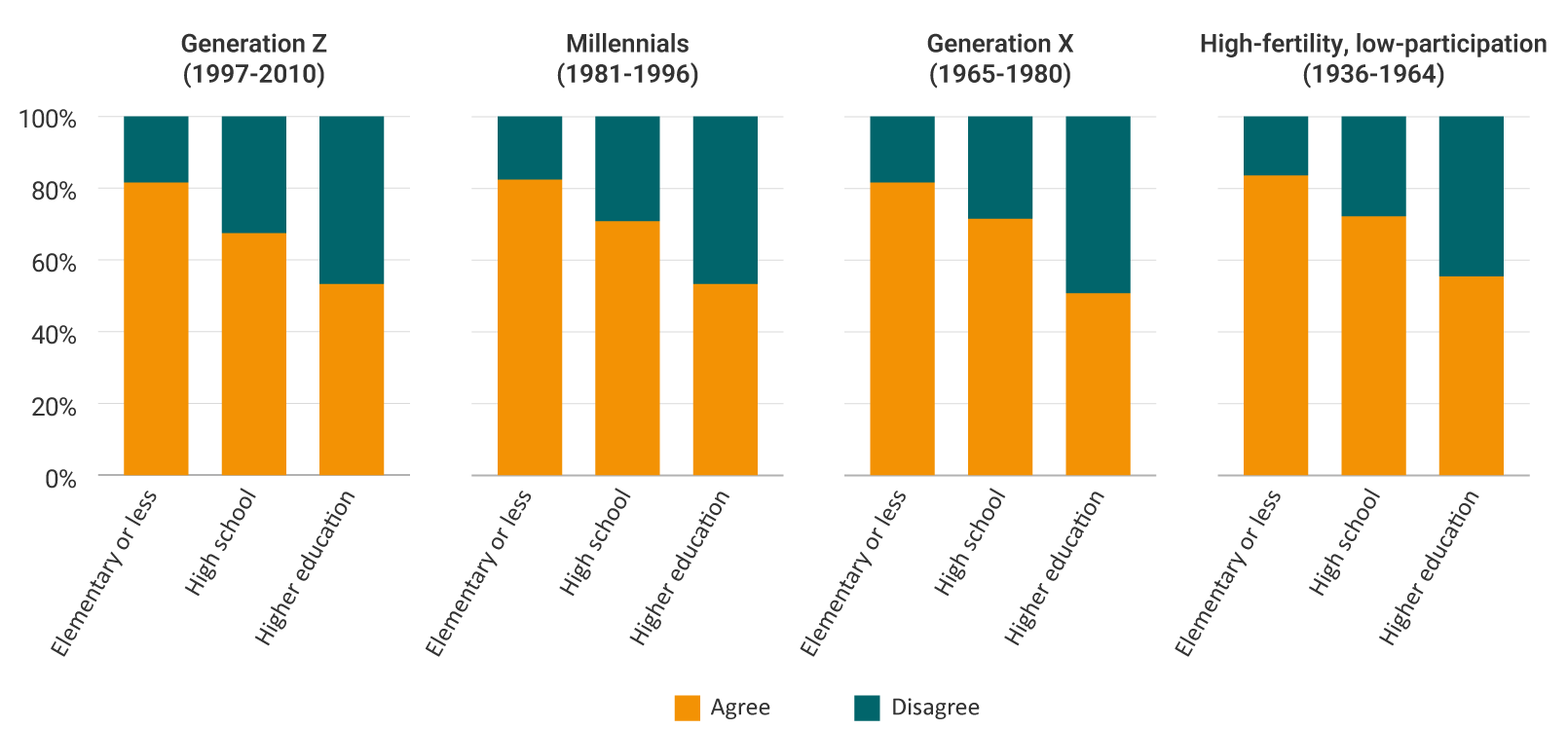
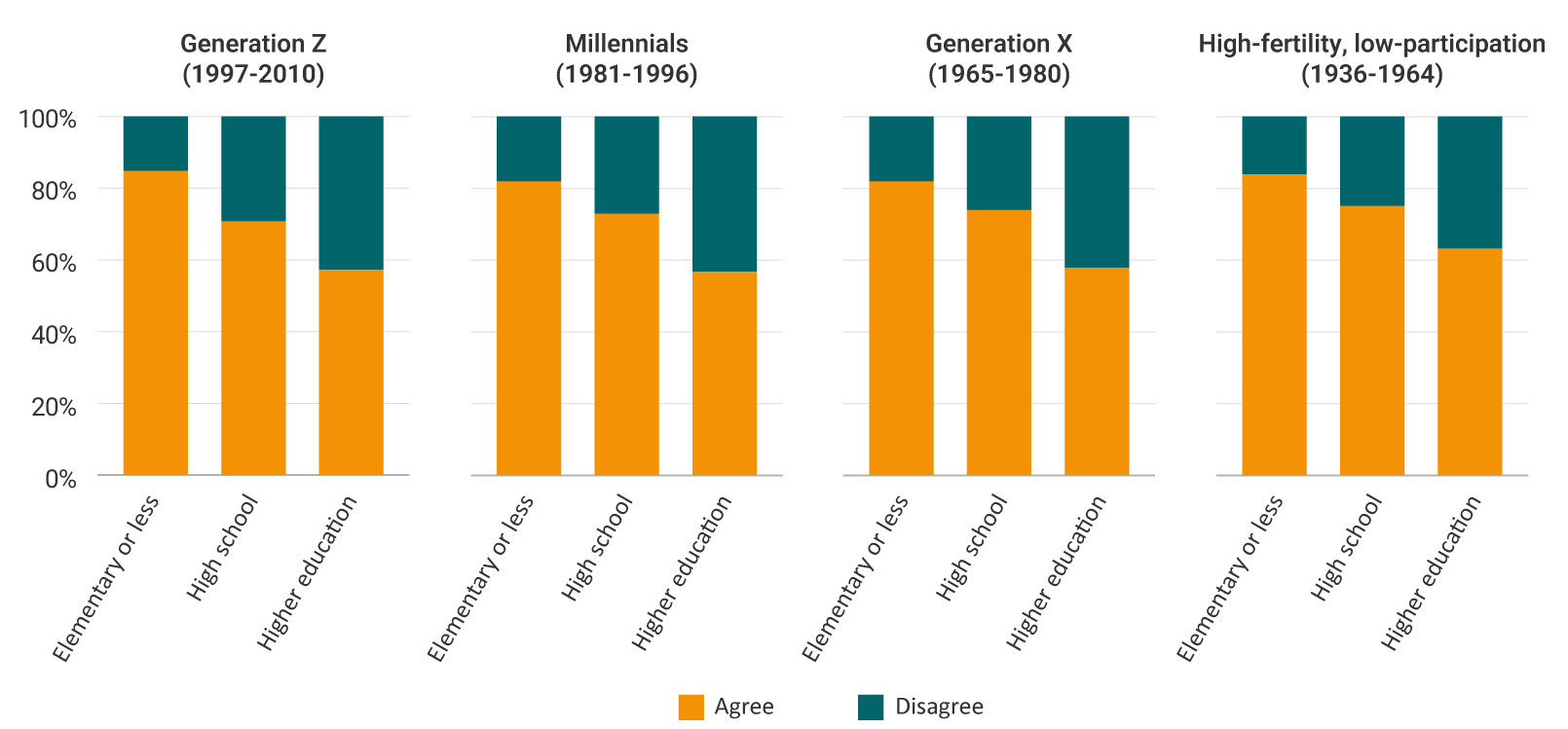
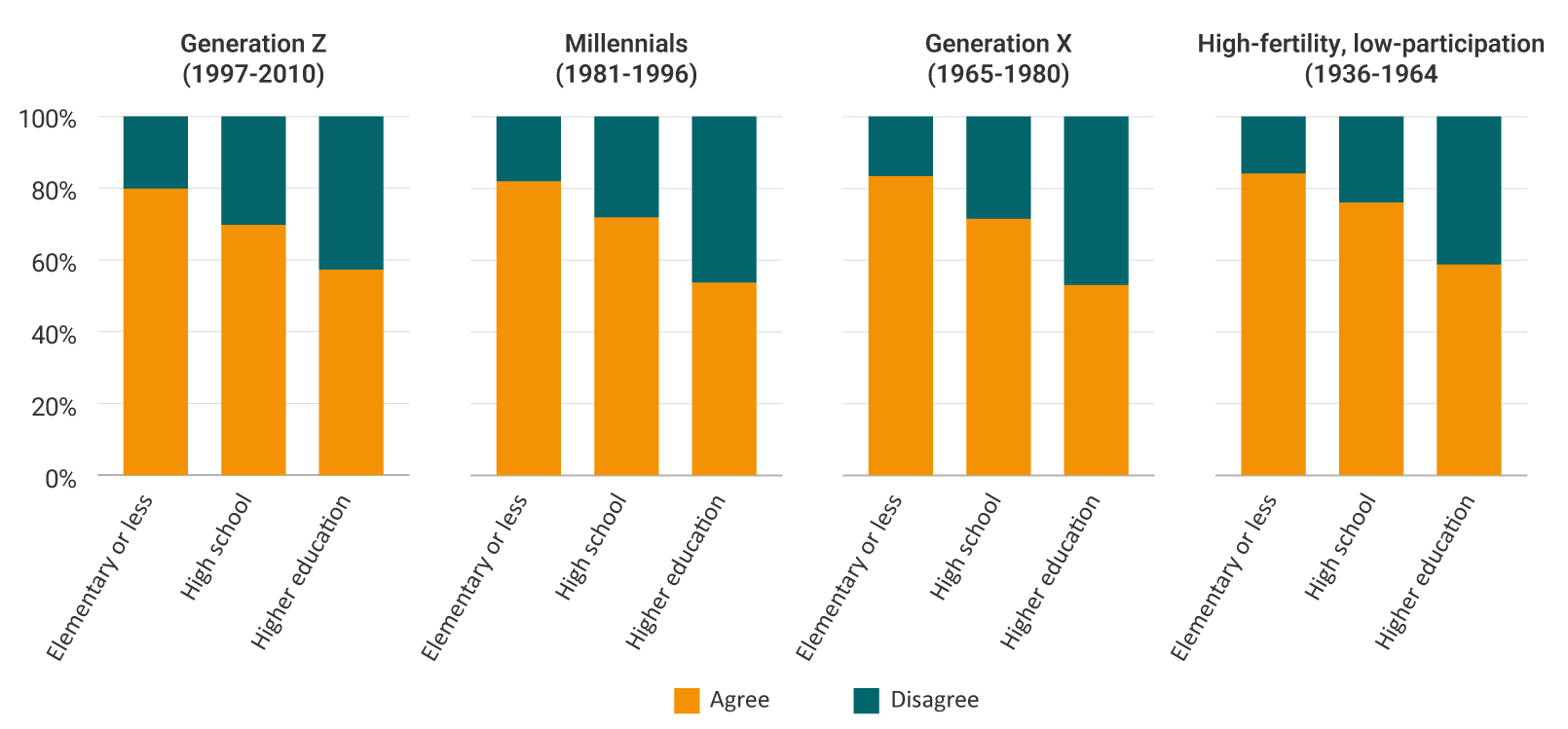
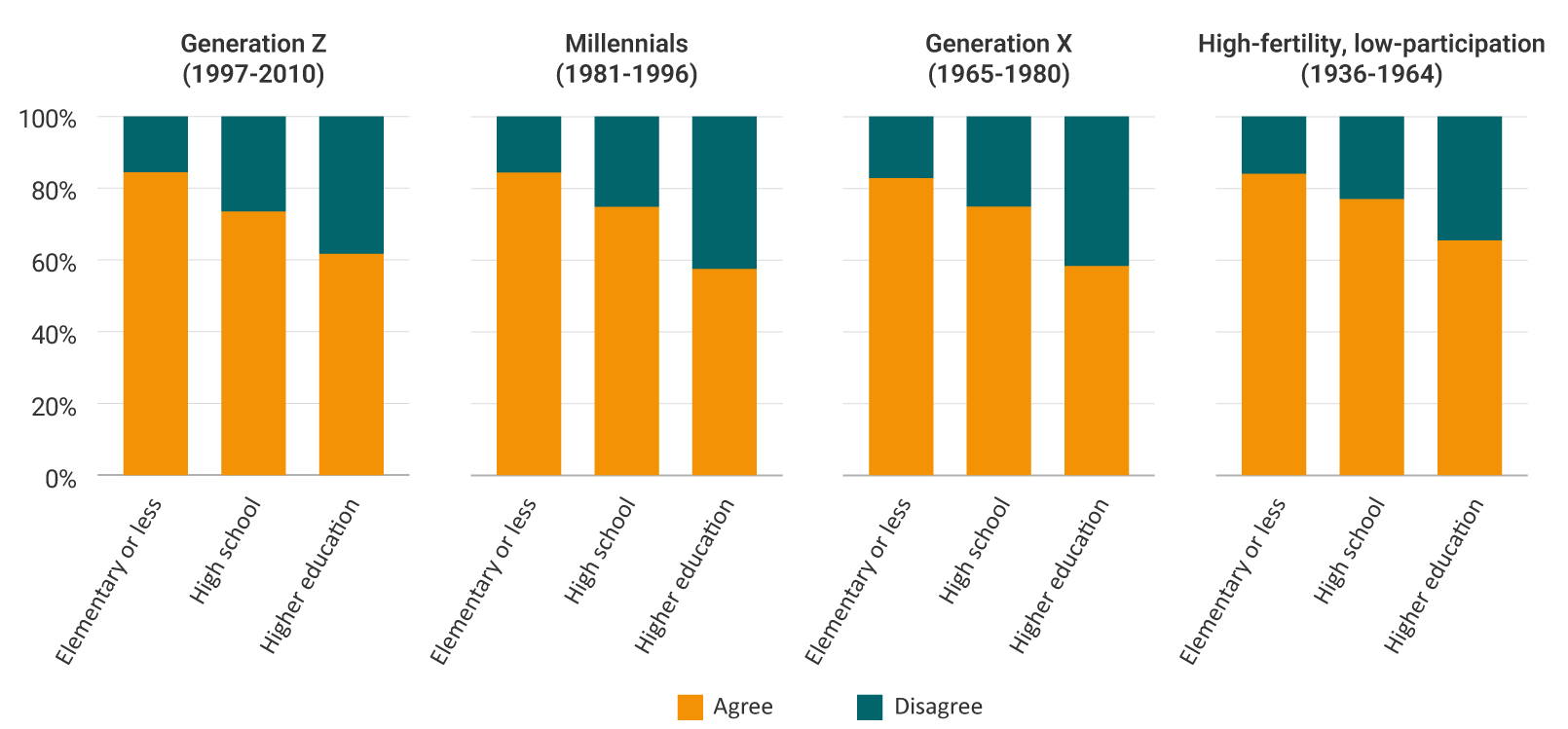
In the document, the authors analyze how women and men across different age groups and educational levels assess the statement “women are better than men at household chores,” a belief that encapsulates deeply rooted gender stereotypes regarding unpaid work. The results are summarized in Graphs 1 and 2, which show the percentage of women and men who agree or disagree with this statement by age group, organized into generational cohorts.
Generations are defined according to year of birth and reflect differing demographic, educational, and labor contexts for women. The high-fertility, low labor force participation cohort (1936–1964) is characterized by early marriages, high fertility, and limited incorporation of women into the labor market, albeit with progress in political rights. Generation X (1965–1980) experienced a decline in fertility, greater access to contraceptive methods, increased female educational attainment, and higher labor force participation. Millennials (1981–1996) are characterized by sustained growth in female enrollment in higher education—surpassing that of men—along with lower fertility rates and greater labor market participation. Generation Z (1997–2010) shows fertility levels below two children per woman and higher educational achievements, although with stagnation in labor force participation and the persistence of income gaps and informality.
The results show that, on average, 50% of both men and women agree with this statement. However, marked differences are observed in both genders by educational level: among individuals with higher education, acceptance of traditional views on domestic work is lower, while among those with lower educational attainment this view is more widely accepted. In contrast, generational differences are small, suggesting that the passage of time alone has not been sufficient to modify these cultural perceptions regarding the role of women in the household.
The comparison between the two rounds of the ENUT reveals a concerning finding. In 2020–2021, a period marked by COVID-19-related lockdowns, a slight return toward more traditional perceptions is observed, even among individuals with high educational levels. For both genders, the proportion agreeing with the statement that women are better at household chores increases. This result suggests that cultural perceptions not only evolve slowly but may also be vulnerable to setbacks during times of crisis. The increase in domestic work burden during lockdowns and the temporary exit of many women from the labor market reinforced, in practice, traditional role divisions, which may have influenced how these tasks are evaluated.
The evidence presented suggests that the so-called “domestic revolution” in Colombia remains elusive. Despite advances in women’s education and labor force participation, cultural perceptions of gender roles within the household are changing at a much slower pace. Even among the most educated groups, traditional beliefs persist, helping to explain why the distribution of unpaid work continues to be unequal, even as gender gaps in the labor market have narrowed.