RSS

BanRep Blog: The Turnaround in Household and Corporate Savings- Investment Balances Between 2020 and 2021

Enviado por nninosam el

In September last year, a blog was published announcing the quarterly publication of the National Accounts by Institutional Sector (CNSI in Spanish), which include the national accounts by the National Administrative Department of Statistics (DANE in Spanish) and the financial accounts by Banco de la República (the Central Bank of Colombia).

BanRep Blog: Impact of the Pandemic on the Colombian Education System

Enviado por nninosam el

In March 2020, the Covid-19 pandemic disrupted educational activities usually carried out in person. To mitigate the cost of closing educational institutions, governments and school and university administrators chose to maintain training processes through virtual tools and other means. However, distance education has various limitations related to the reduction in learning time, changes in the way students interact, unequal access to information technologies, widening gaps in academic performance, loss of motivation, and stress for students and teachers.

BanRep Blog: Emigration and Tax Revenue

Enviado por nninosam el

When citizens of a developing country decide to emigrate in search of a better future, their lives and those of their families are not the only ones affected. This decision can also have an impact on different aspects of the country of origin  , such as income, inequality, the quality of its institutions, education, and job opportunities. One aspect that has recently drawn attention is the effect of emigration on the tax revenue of the countries of origin when they are underdeveloped.

Blog BanRep: Brechas en el desarrollo de pagos digitales en Colombia

Enviado por nninosam el

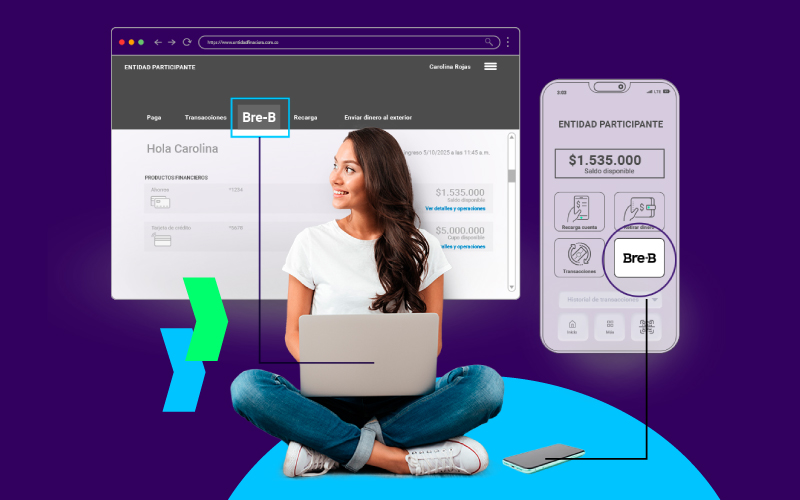
A partir de la pandemia del COVID-19 se ha venido observando en Colombia un importante aumento en el uso de canales de pago electrónicos. Este blog presenta información detallada sobre la evolución de estos canales de pago y sus características, identificando las principales brechas que se observan en el país.

Blog BanRep: Pagos por servicios de salud e incentivos de los prestadores

Enviado por nninosam el

Se discute en la actualidad una reforma al sistema de salud en la que se propone que el pago a las instituciones prestadoras de servicios de salud (conocidas usualmente como IPS) se haga directamente por parte de una entidad pública, la Administradora de los Recursos del Sistema General de Seguridad Social en Salud (ADRES), con base en tablas de tarifas por servicio. Al margen de otras implicaciones de la propuesta, es importante señalar que el esquema de pagos que se adopte afecta las decisiones de los prestadores de servicios respecto a los tratamientos para sus usuarios.

BanRep Blog: Expected effect of climate change on economic activity

Enviado por nninosam el

There is a broad consensus in the scientific community regarding the risks associated with climate change on the economic activity of most countries in the world. Such risks may be physical or transitional. Physical risks are related to the gradual increase in temperatures around the globe and the increased frequency of extreme events such as droughts, floods, and hurricanes. Transition risks are related to the costs and economic effects of climate change mitigation policies, the adoption of new technologies, and changes in consumption patterns.

BanRep Blog: Performance of the Exchange Rate and Policy Strategies

Enviado por nninosam el

The Colombian peso has exhibited a volatile behavior and a significant depreciation in recent months. In view of this trend, the question arises as to whether an intervention by Banco de la República (the Central Bank of Colombia) in the foreign exchange market to stabilize the currency would be desirable.

Blog BanRep: El efectivo sigue siendo el instrumento de pago preferido por el público y el comercio en Colombia

Enviado por nninosam el

Los instrumentos de pago al por menor desempeñan un papel fundamental en la estabilidad económica y financiera, y en el funcionamiento del comercio. Entre ellos están el efectivo, las tarjetas débito y crédito, los cheques y las transferencias electrónicas.