National Financial Accounts Bulletin by Institutional Sector – Fourth Quarter 2025

Below is a summary of the financial accounts by institutional sector and financial instrument. For further details, please refer to the Technical Bulletin (only in Spanish).

Publication Date:

Note: Starting with this bulletin, the series of consolidated balances with counterpart sectors is published for the first time for the period Q1 2022 to Q4 2024. As a result of this new counterparty estimation, the non-consolidated balances for Q1 2022 to Q4 2024 were revised, and the non-consolidated balances for Q1 2025 to Q3 2025 were re-estimated based on the new non-consolidated balance for Q4 2024.


Financial Flows for the fourth quarter of 2025

1. By institutional sector

According to the financial accounts calculated by Banco de la República (the Central Bank of Colombia), in the fourth quarter of 2025, the current account deficit of the Colombian economy reached 2.7% of quarterly Gross Domestic Product (GDP), compared to 1.7% in the same period in 2024. This is primarily explained by the deficits of the General National Government (-20%). The institutional sectors that partially offset the deficit were non-financial corporations (12.7%), households (3.8%), and financial corporations (0.7%).
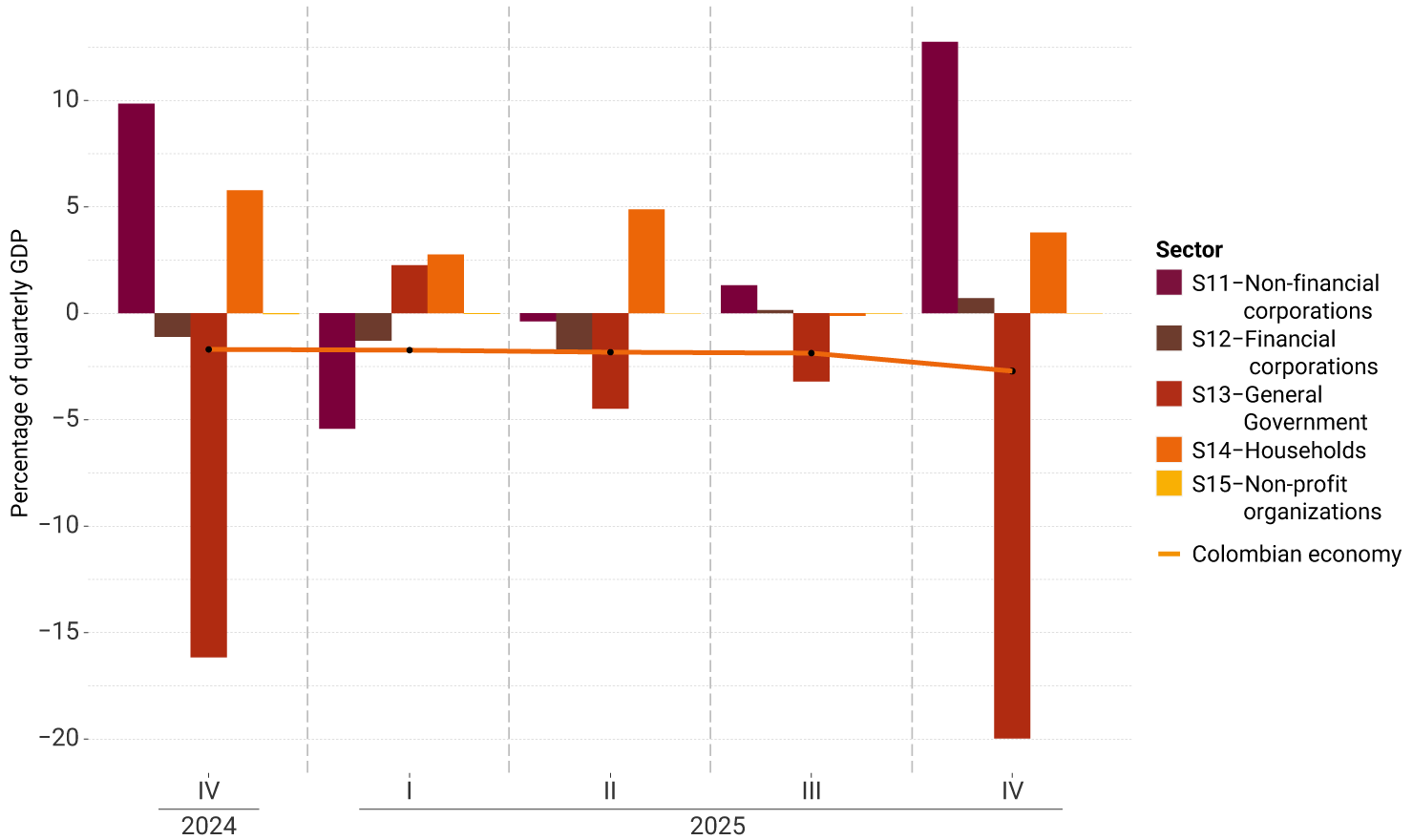
Graph 1. Current Account Deficit of the Colombian Economy and Savings and Investment Balances by Institutional Sector, Q4 2024 – Q4 2025
The vertical axis of the graph represents the percentage of quarterly GDP, between -20% and 15%. It exhibits the performance by institutional sectors from the fourth quarter of 2024 to the fourth quarter of 2025. For the last quarter, the current account deficit of the Colombian economy was mainly driven by the General National Government (-20%), while non-financial corporations contributed positively to savings (12.7%). The Colombian economy remained relatively stable (-2.7% of GDP) compared to the previous quarter.
Source: Banco de la República – Financial Accounts

Compared to the fourth quarter of 2024, the economy’s consolidated external financing needs increased by 1.0 percentage points (pp), as reflected in the internal and external financing flows of institutional sectors. Therefore, the increase in the economy’s financing was explained by the greater financing needs of the General National Government (3.8 pp) and by changes in the financing capacity of households (-1.9 pp), as well as non-financial corporations (2.9 pp) and financial corporations (1.8 pp).
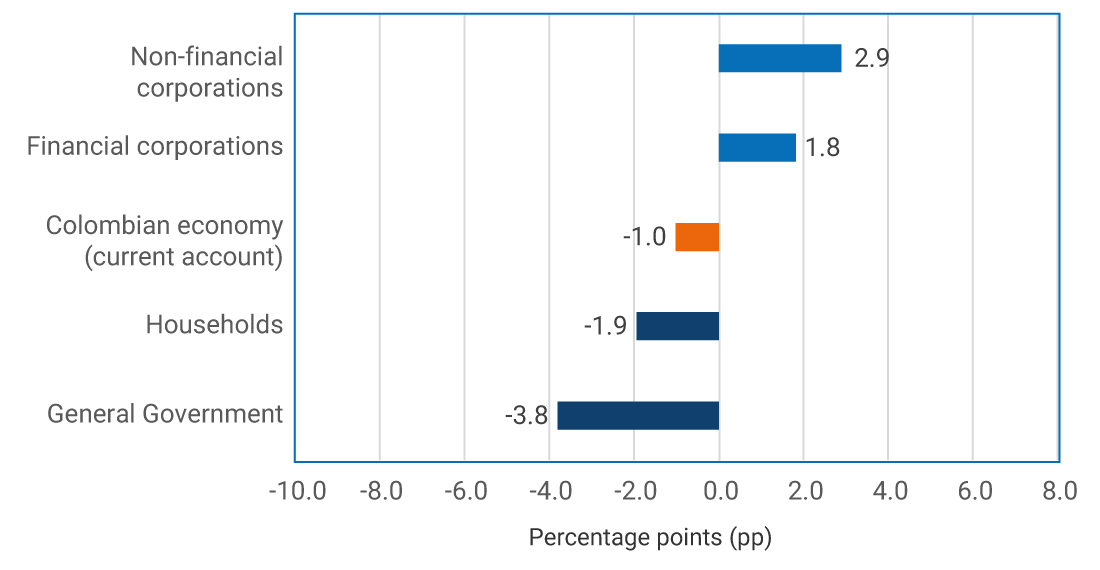
Graph 2. Explanation of the Change in the Colombian Economy’s Saving-Investment Balance by Institutional Sectors, Q4 2024 – Q4 2025
Non-Financial corporations: 2.9. Financial corporations: 1.8. Colombian economy (current account): -1.0. Households: -1.9. General National Government: -3.8.
Source: Banco de la República – Financial Accounts

2. By financial instrument / net external financing

The negative quarterly saving-investment balance of the Colombian economy was covered by net external financing flows equivalent to 2.7% of quarterly GDP. Net inflows of financial resources from the rest of the world were primarily channeled through the issuance of debt securities to the rest of the world (1.1%), the incurrence of loans (1.0%), and accounts payable (1.0%). This was partially offset by deposit outflows to the rest of the world, totaling 0.9% of quarterly GDP.
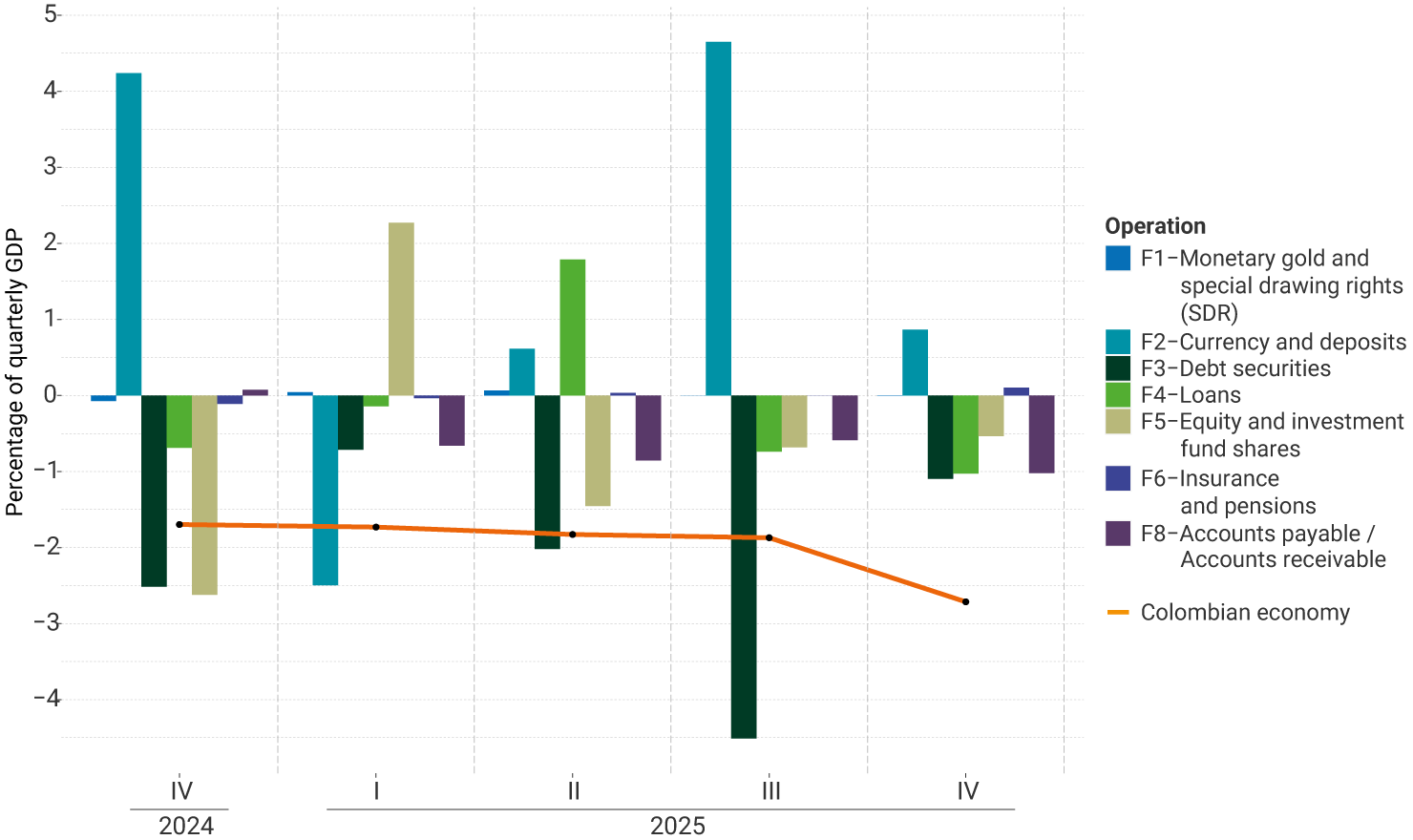
Graph 3. Net External Financing of Colombia’s Saving-Investment Balance by Financial Instrument, Q4 2024 – Q4 2025
The vertical axis of the graph represents the percentage of quarterly GDP, between -5.0% and 5.0%. It exhibits the performance from the fourth quarter of 2024 to the fourth quarter of 2025 by financial instrument. For the last quarter, currency and deposit operations were the financial instruments showing positive percentages in Colombia’s net external financing during the period analyzed. On the other hand, the deficit is mainly driven by transactions in debt securities, loans, and accounts payable and receivable. The Colombian economy declined compared to the previous quarter.
Source: Banco de la República – Financial Accounts

Compared to the fourth quarter of 2024, the 1.0 pp increase in external financing inflows was primarily driven by a lower accumulation of deposits abroad (3.4 pp) and a higher incidence of accounts payable (1.1 pp). This was partially offset by a decline in equity investments (2.1 pp) and a lower issuance of debt securities abroad (1.4 pp).
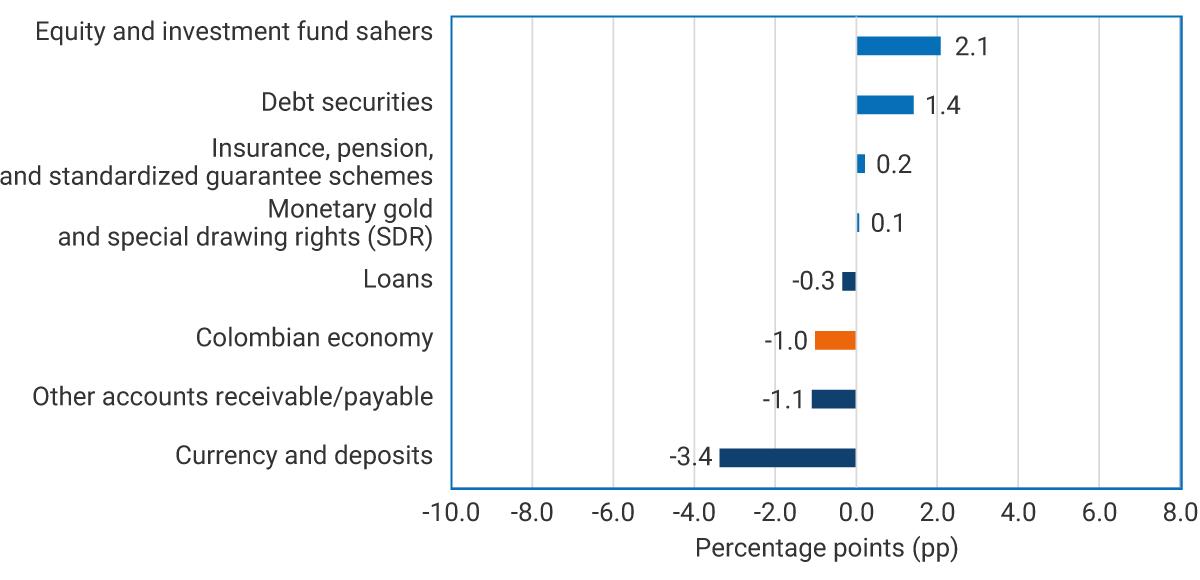
Graph 4. Explanation of the Change in the Financing Needs of the Colombian Economy by Financial Instrument, Q4 2024 – Q4 2025
Equity and investment fund shares: 2.1. Debt securities: 1.4. Insurance, pension, and standardized guarantee schemes: 0.2. Monetary gold and special drawing rights: 0.1. Loans: -0.3. Colombian economy: -1.0. Other accounts receivable/payable: -1.1. Currency and deposits: -3.4.
Fuente: Banco de la República – Financial Accounts

Financial Account Balances for the fourth quarter of 2025

1. Net financial position by institutional sector

At the end of 2025, the Colombian economy recorded a net debtor position with the rest of the world equivalent to -45.9% of annual GDP. The sectors with net debtor positions were non-financial corporations (-69.6%) and the General National Government (-44.8%). In contrast, households (61.1%) and financial corporations (7.2%) showed net creditor positions.

Between 2024 and 2025, there was an increase of 3.0 pp in the economy’s external debtor position, explained by lower net creditor positions of households (4.5 pp) and financial corporations (4.0 pp), together with a larger debtor position of the General National Government (1.0 pp). These changes were partially offset by a reduction in the net debtor position of non-financial corporations (6.5 pp).
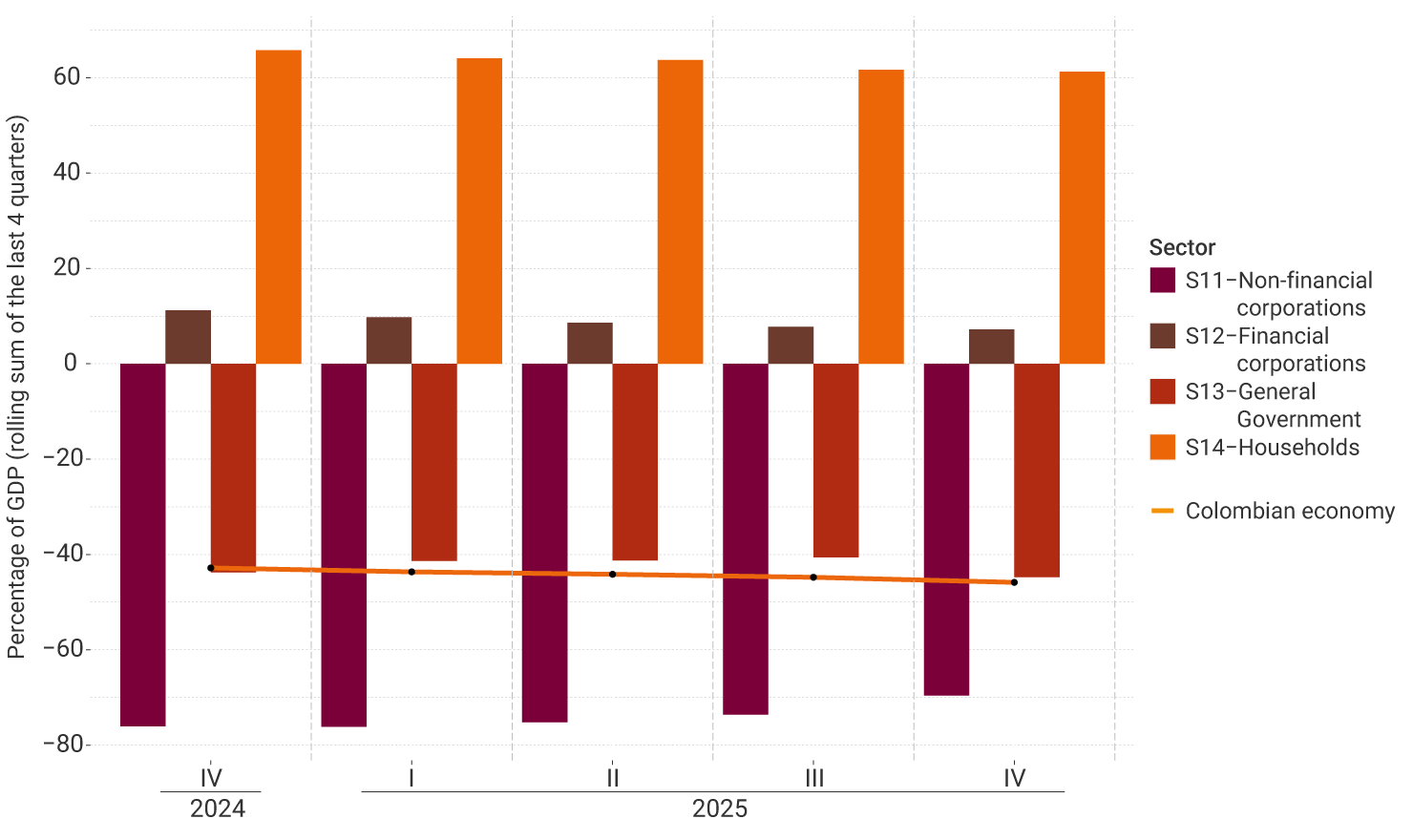
Graph 5. Colombia’s Net Financial Position by Institutional Sector, Q4 2024 – Q4 2025 (percentage of annual nominal GDP*)
* Corresponds to the rolling sum of quarterly GDP for the last 4 periods.
The vertical axis of the graph represents the rolling sum of the last four quarters of the percentage of GDP, between -80% and 70%. It exhibits the performance from the fourth quarter of 2024 to the fourth quarter of 2025 by institutional sector. For the last quarter, no significant changes were observed in the net financial position of the sectors compared to the previous quarter: non-financial corporations showed a deficit of approximately 70%, while households recorded savings of 60%. The Colombian economy’s position declined slightly to -45.9%.
Source: Banco de la República – Financial Accounts

2. Net external position by financial instrument

At the end of 2025, the net debtor position of the Colombian economy with the rest of the world, equivalent to -45.9% of annual GDP, was primarily represented by equity investments (-31.6%), loans (-17.1%), and debt securities (4.2%). This was partially offset by Colombians’ foreign holdings of deposits (5.9%).

Between 2024 and 2025, the 3.0 pp increase in the economy’s net debtor position was mainly driven by the growth of debtor positions in equity investments (3.8 pp) and debt securities (2.4 pp). This change was partially offset by a lower debtor position in loans (4.5 pp).
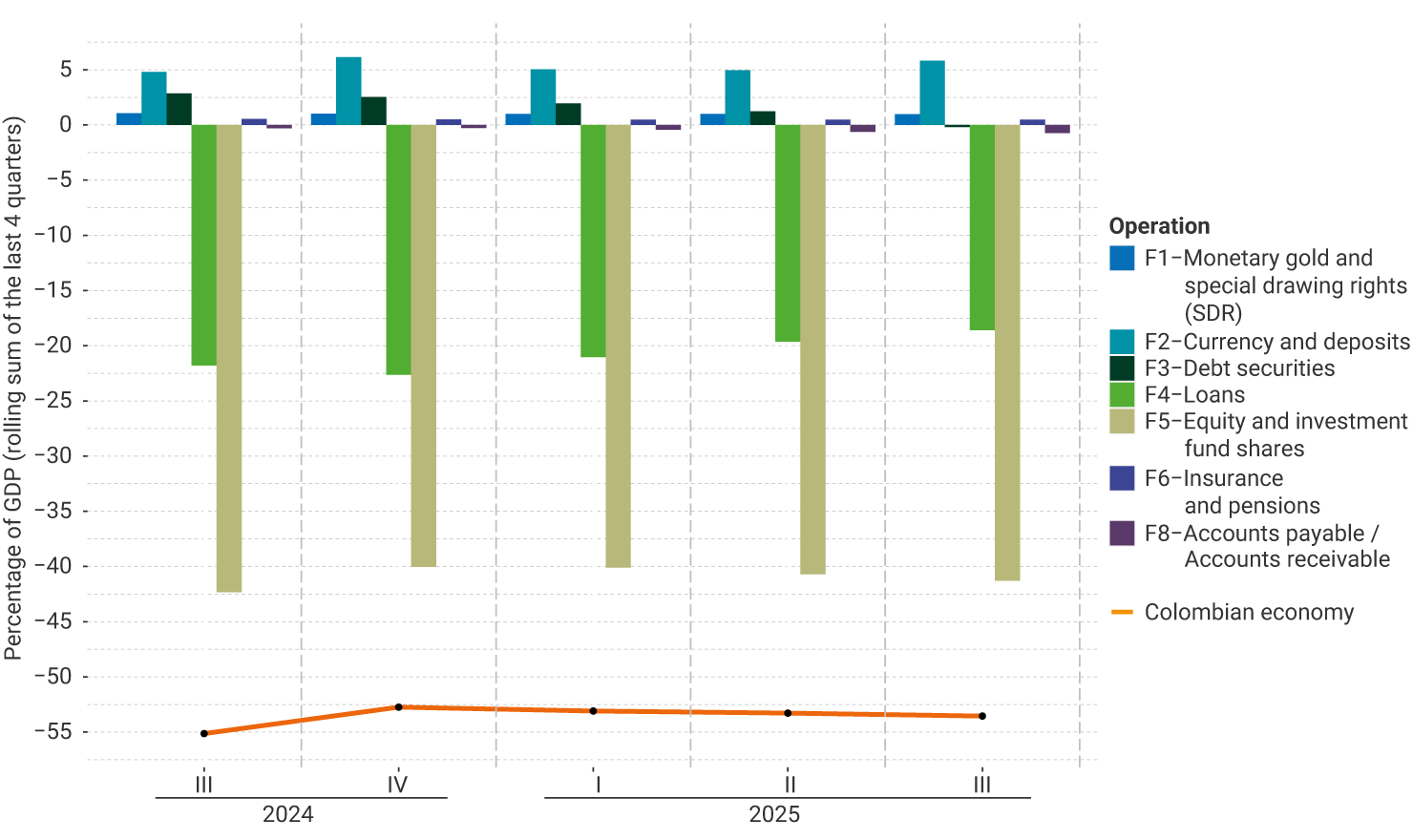
Graph 6. Net External Financial Position of the Colombian Economy by Financial Instrument, Q4 2024 – Q4 2025 (percentage of annual nominal GDP*)
* Corresponds to the rolling sum of quarterly GDP for the last 4 periods.
The vertical axis of the graph represents the rolling sum of the last four quarters of the percentage of GDP, between -45% and 5.0%. It exhibits the performance from the fourth quarter of 2024 to the fourth quarter of 2025 by financial instrument. For the last quarter, no significant changes were observed in the external financial position by instrument compared to the previous quarter, in which the largest savings were due to currency and deposit operations, while the deficit was mainly driven by loans, as well as equity and investment fund shares operations. The Colombian economy’s position declined slightly, standing at around -45.9%.
Source: Banco de la República – Financial Accounts

National Financial Accounts Bulletin by Institutional Sector published until now (available since 2024)

Título Fecha de publicación
National Financial Accounts Bulletin by Institutional Sector - Fourth Quarter 2023
National Financial Accounts Bulletin by Institutional Sector - Third Quarter 2023