Borradores de Economía - Non-monotonic Tradeoffs of Tiering in a Large Value Payment System
La serie Borradores de Economía, de la Subgerencia de Estudios Económicos del Banco de la República, contribuye a la difusión y promoción de la investigación realizada por los empleados de la institución. Esta serie se encuentra indexada en Research Papers in Economics (RePEc).
En múltiples ocasiones estos trabajos han sido el resultado de la colaboración con personas de otras instituciones nacionales o internacionales. Los trabajos son de carácter provisional, las opiniones y posibles errores son responsabilidad exclusiva del autor y sus contenidos no comprometen al Banco de la República ni a su Junta Directiva.
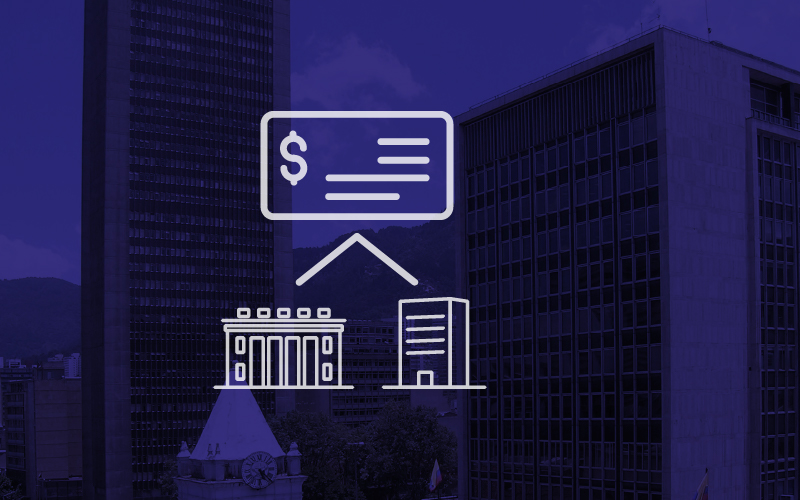
Even though international authorities encourage open and wide access to large value payment systems, the optimal level of access, or tiering, is still an open question. In the case of real-time gross settlement systems (RTGS), the level of access, or tiering, may be limited by the tradeoff between: (i) potentially higher liquidity needs of a larger pool of direct participants settling in real time and (ii) the lower counter-party credit risks that result from a lower number of second-tier participants entering in uncovered bilateral credit positions with correspondent banks. Previous literature has evaluated this tradeoff through simulations finding monotonically increasing liquidity savings and increasing credit risk exposures as the level of tiering in the system rises. In contrast, we find that in the Colombian RTGS case liquidity savings increase but then decrease with higher tiering showing a hump shape. Our results provide insights into the effects of tiering when participants are too-big or too-connected to tier.
Actualizado: el 8 de septiembre de 2017 a las 15:23.